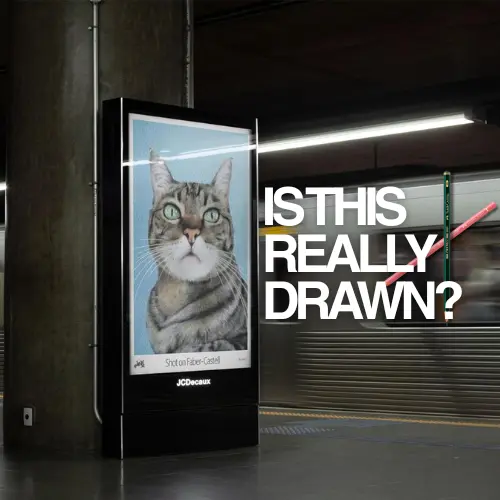
Cultural Context: Strong Advertising Formats Become Cultural Shortcuts
Few campaigns in modern advertising are as instantly recognizable as Apple’s Shot on iPhone.
Its formula is deceptively simple:
- Minimal branding
- High-impact imagery
- Confidence in product output
Over time, the format evolved beyond advertising into cultural shorthand for photographic excellence.
That recognition created an unusual opportunity.
Rather than competing directly for attention, Faber-Castell borrowed a visual language audiences already trusted.
The campaign demonstrates an important truth in modern branding: sometimes the fastest way to communicate quality is through familiar structures.
Insight: The Best Demonstration Is the One People Do Not Notice at First
The campaign is built around a powerful psychological principle:
People trust what they believe they discovered themselves.
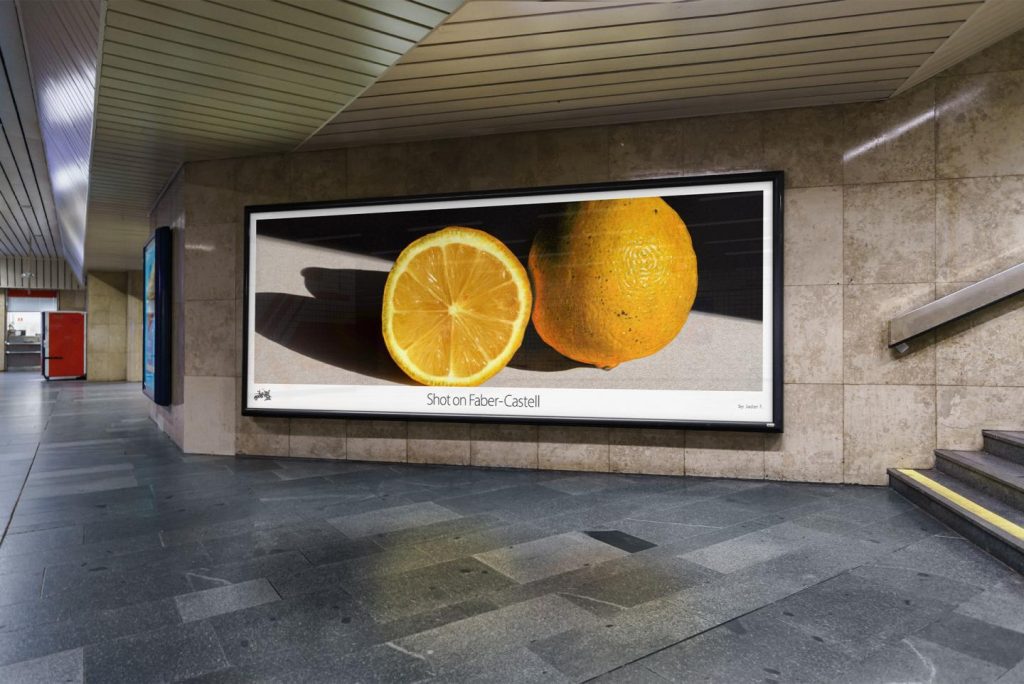
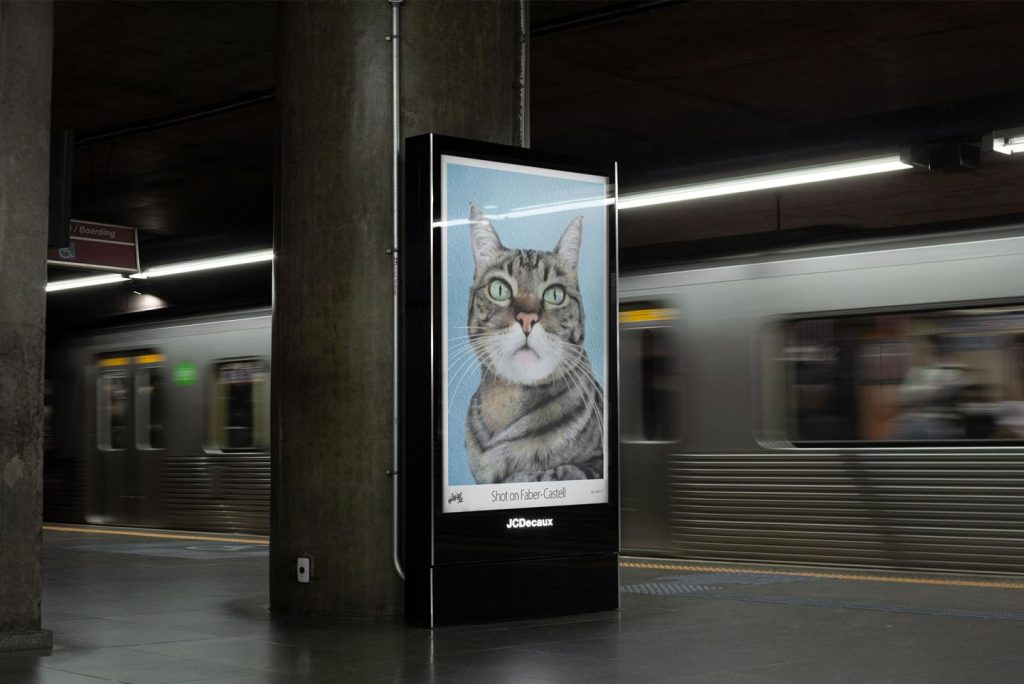
At first glance, commuters see what appears to be professional photography. Nothing feels unusual.
The deception works because audiences have no immediate reason to question the visual.
Only later comes the reveal:
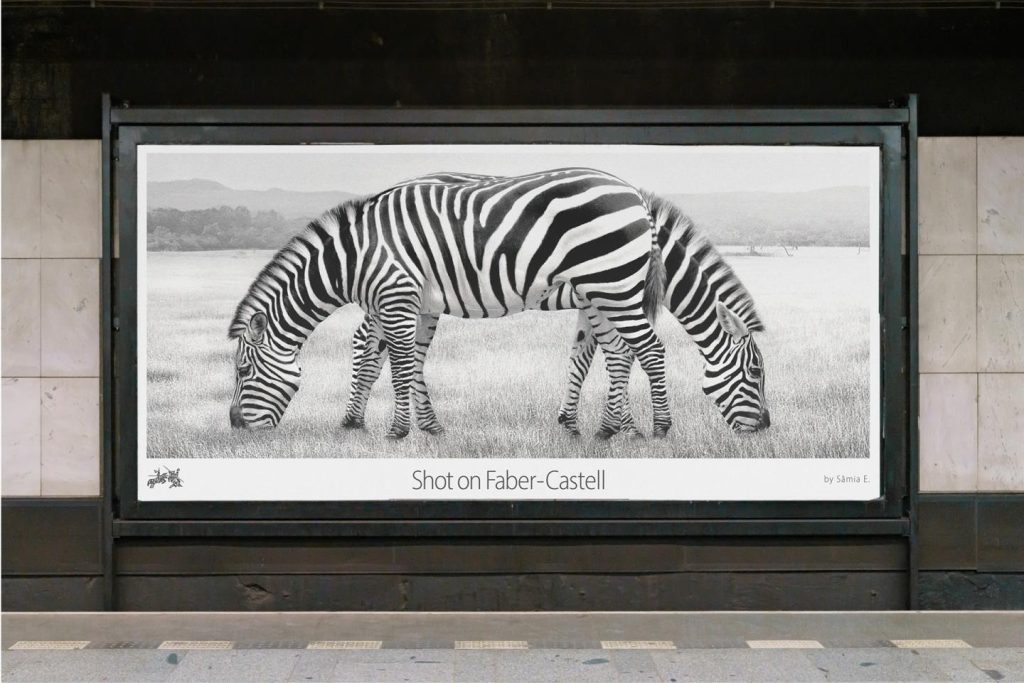
The “photographs” are actually pencil drawings created using Faber-Castell products.
That shift reframes the audience’s perception instantly.
What looked like camera precision becomes proof of human craftsmanship.
The billboard itself becomes evidence.
Media Strategy: OOH as a Product Demonstration at Scale
Most product demonstrations require explanation.
This campaign removes explanation entirely.
Placed across:
- Billboards
- Metro stations
- High-footfall commuter routes
the work uses scale as a credibility device.
Large-format OOH becomes critical because imperfections would be exposed immediately.
The drawings had to withstand close scrutiny at city scale.
That pressure actually strengthens the campaign.
The bigger the format, the more convincing the reveal becomes.
Creative Execution: Borrowing Equity Without Becoming Derivative
The brilliance of “Shot on Faber-Castell” lies in how it borrows without parodying.
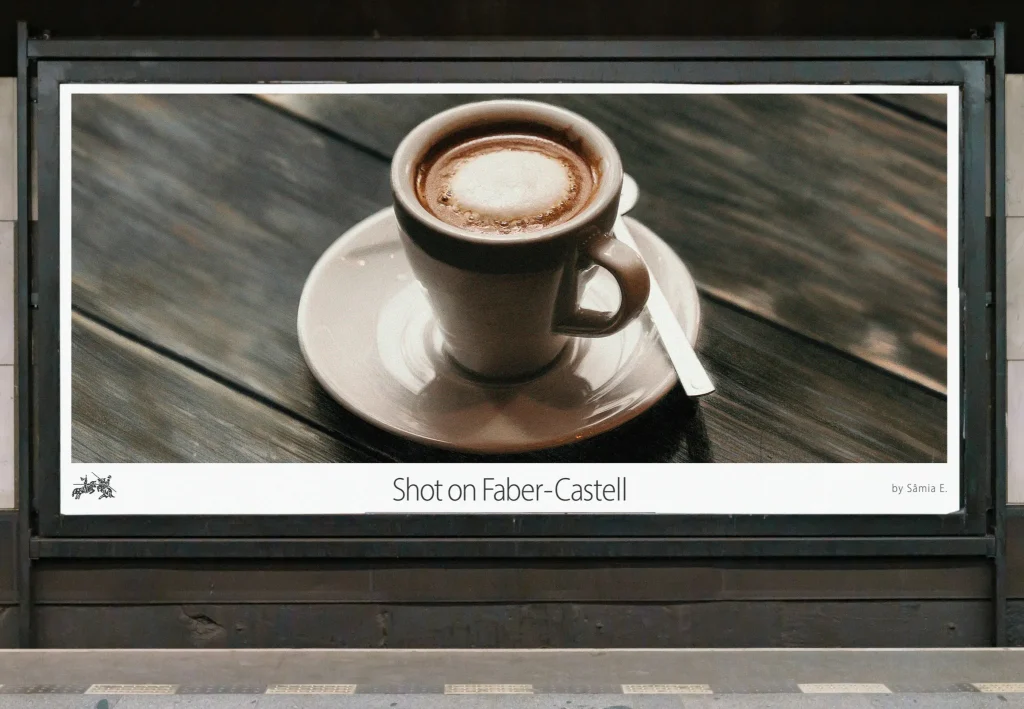
The campaign mirrors the familiar structure of Shot on iPhone:
- Minimal composition
- Bold captions
- Large-format image focus
But instead of mocking Apple, the work respectfully enters the same cultural territory: image-making excellence.
This is not anti-tech.
It subtly argues that artistic tools deserve a place in conversations about visual mastery too.
That distinction keeps the work intelligent rather than cynical.
Strategic Impact: Repositioning Pencils in a Digital World
For traditional creative tools, modern relevance can be difficult.
Consumers increasingly associate image creation with smartphones, software, and AI.
Faber-Castell reframes pencils not as nostalgic tools, but as instruments capable of extraordinary precision.
The campaign shifts perception from:
Traditional craft → Visual mastery
That repositioning is especially important for younger, visually native audiences who may not instinctively associate pencils with contemporary creativity.
Creative Lesson: Hijacking Works Best When It Elevates the Original
Many brand hijacks fail because they rely purely on imitation or mockery.
This campaign works because it contributes something meaningful to the original conversation.
Apple owns technological image capture.
Faber-Castell reframes manual creation as equally impressive.
The relationship feels additive rather than competitive.
That subtlety is what gives the campaign staying power.
Execution Insight: Surprise Is Stronger When Hidden in Familiarity
The deception succeeds because nothing initially feels disruptive.
The campaign blends into visual expectations before revealing its twist.
That delayed realization creates a stronger emotional response than immediate spectacle.
In OOH—where attention spans are short—that kind of cognitive reversal becomes highly memorable.
The audience effectively experiences the product benefit before understanding it.
Final Reflection: When the Billboard Becomes the Product Proof
“Shot on Faber-Castell” remains a strong example of how outdoor advertising can teach through restraint.
Rather than overwhelming audiences with features or explanations, the campaign trusts curiosity and craft to do the work.
By borrowing one of advertising’s most recognizable systems and quietly subverting it, Faber-Castell proves something larger than product quality:
Sometimes, the most convincing demonstration is the one hiding in plain sight.
Summary
Faber-Castell partnered with DAVID São Paulo to launch “Shot on Faber-Castell,” an OOH campaign that recreated the visual grammar of Apple’s iconic photography platform. Displayed across billboards and Metro stations in Brazil, what initially appeared to be photographs were eventually revealed as hyperrealistic pencil drawings—transforming outdoor media into a large-scale demonstration of artistic precision.
Sources
Frequently Asked Questions
It presents hyperrealistic pencil drawings disguised as photographs in OOH placements.
The campaign appeared across billboards and Metro stations in Brazil.
It borrows Apple’s recognizable visual format while turning the billboard into a live product demonstration.
People trust demonstrations more when they experience surprise and discovery themselves.
Ready to advertise outdoors?
BM Outdoor plans, buys and prints OOH campaigns across all 50 states. Request a free quote with no commitment.
















Comments
Be the first to comment.