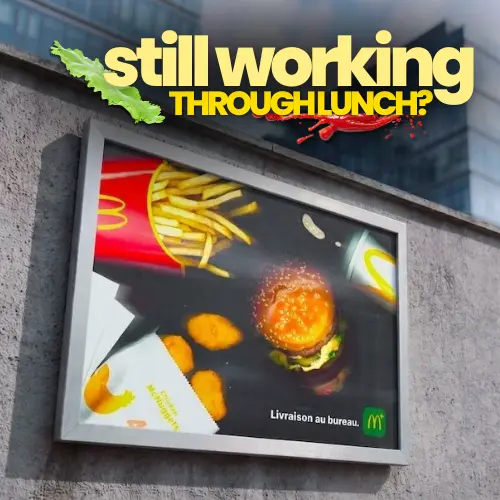
Cultural Context: Delivery Marketing Has Long Been Built Around Home Consumption
Food delivery advertising typically revolves around domestic environments.
The imagery is familiar:
- Sofas
- Streaming platforms
- Weekend cravings
- Late-night indulgence
But working habits have changed.
Hybrid schedules, office returns, and long workdays mean a significant portion of food consumption now happens inside workplaces.
Despite this behavioral reality, most food brands still market delivery as an at-home activity.
That disconnect creates an overlooked opportunity.
Insight: Hunger at Work Is Highly Predictable but Poorly Addressed
The campaign starts from a sharp consumer truth:
More than 30% of meals are consumed during work hours, yet very few brands actively speak to office eating behavior.
Workplace hunger is uniquely contextual.
It often appears:
- Between meetings
- During productivity dips
- Around predictable lunch routines
- In moments of shared office fatigue
Importantly, office workers are surrounded by repetitive visual systems—emails, printers, scanners, internal communication.
McDonald’s recognized an opportunity to insert itself into that environment naturally.
Media Strategy: Turning Office Infrastructure Into Media Space
Rather than advertising near offices, the campaign enters office behavior itself.
The creative mechanic is deceptively simple:
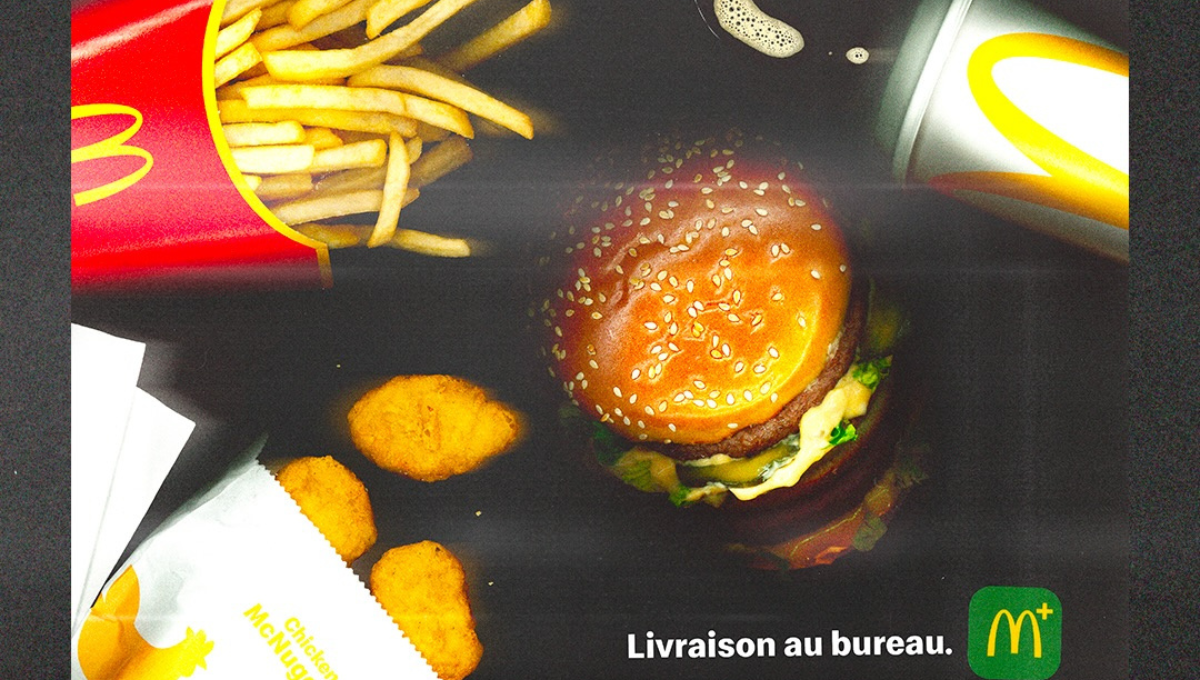
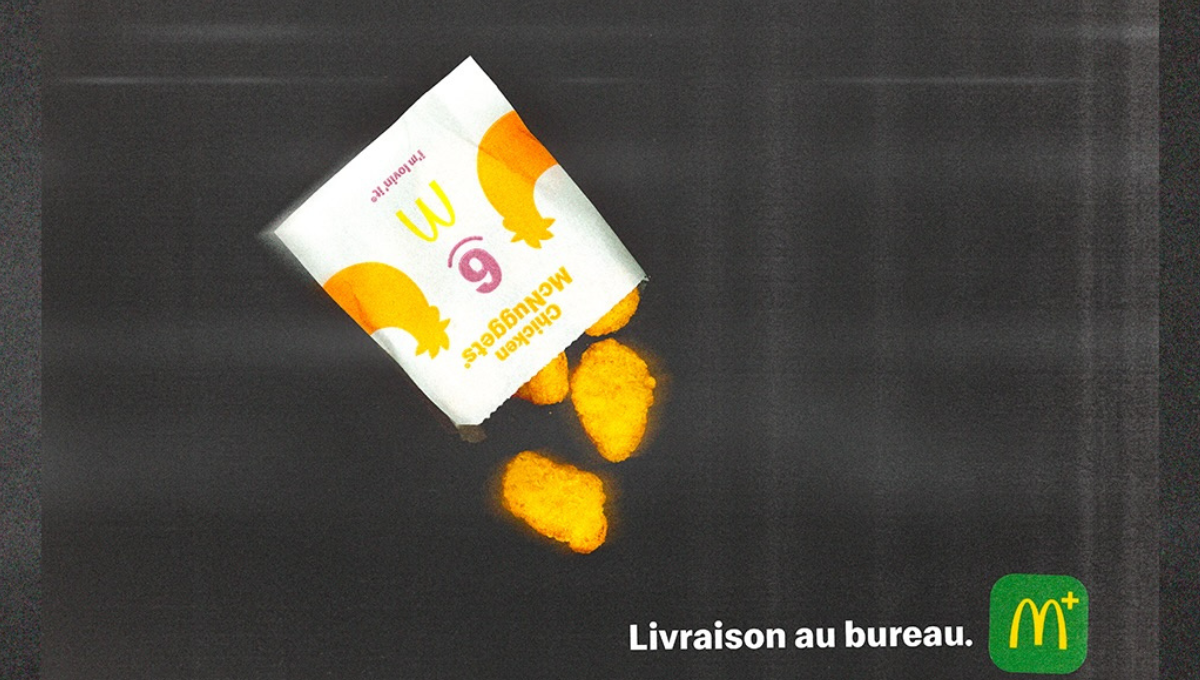
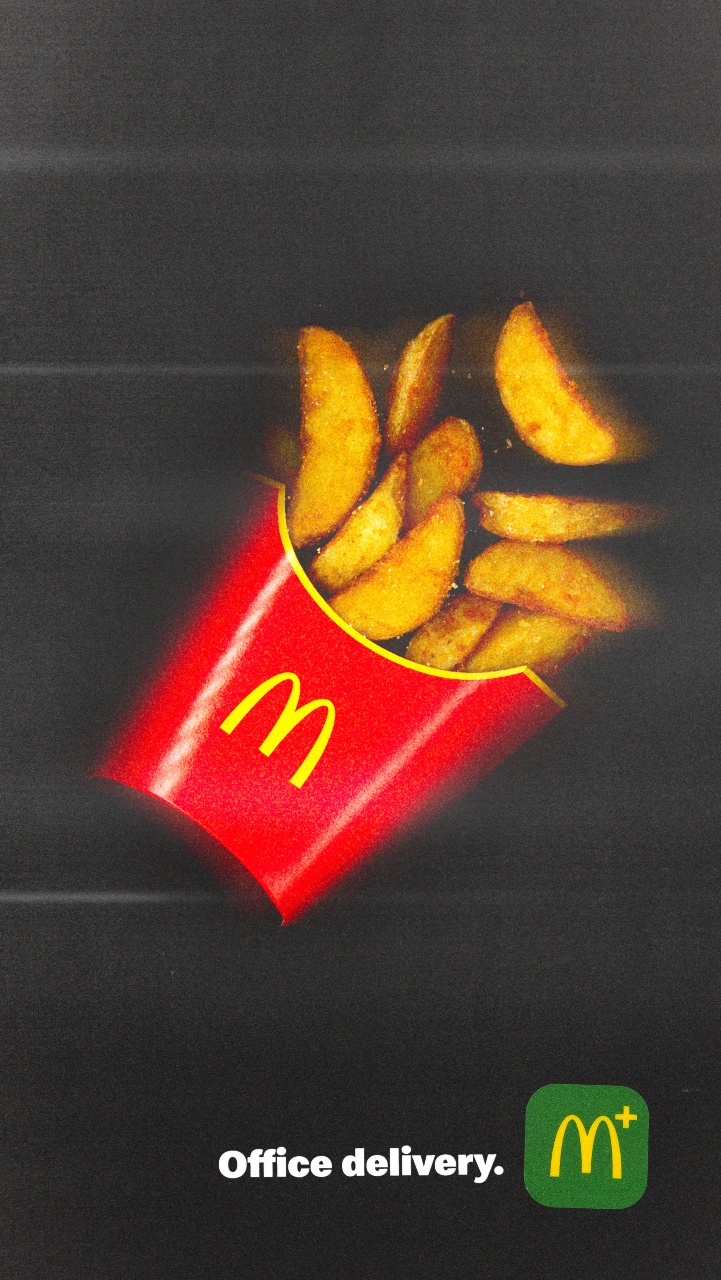
McDonald’s products are placed directly on photocopier scanners, generating distorted food imagery that feels native to workplace visuals.
Those scans are then distributed via email to employees.
This creates several strategic advantages:
- High contextual relevance
- Surprise through familiarity
- Workplace-native visual language
- Immediate decision-making proximity
Instead of interrupting office life, the campaign disguises itself as part of it.
Creative Execution: Using the Copier as Cultural Symbol
The brilliance of “Office Delivery” lies in object selection.
Few workplace objects are as universally recognizable as:
- Printers
- Scanners
- Photocopiers
They symbolize bureaucracy, repetition, and everyday office routine.
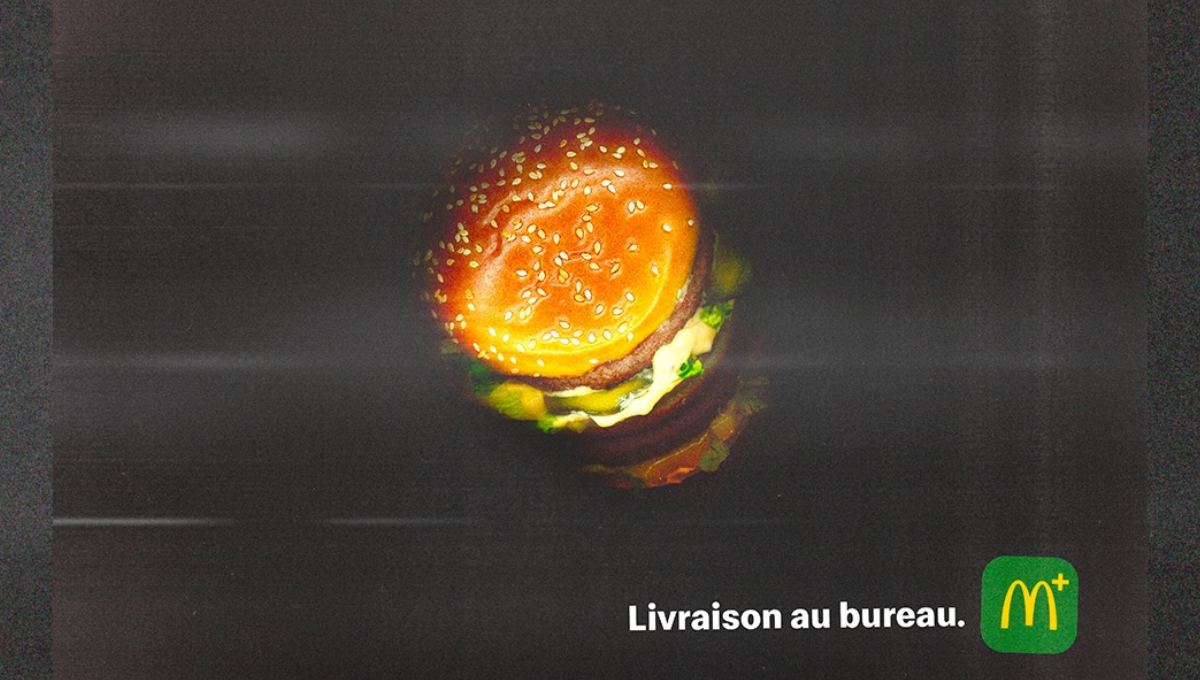
By placing food directly onto the scanner glass, McDonald’s transforms a mundane office object into something playful and appetite-inducing.
The visual distortion of scanned burgers and fries also feels strangely authentic—almost accidental.
That authenticity makes the campaign feel less like advertising and more like workplace humor.
Strategic Impact: Context Beats Reach
Reaching 235,000 employees matters.
But the real strength of the campaign is not scale—it is timing and environment.
Office workers receive the creative exactly where hunger decisions happen.
This proximity to consumption moments strengthens:
- Recall
- Relevance
- Conversion potential
The message arrives not when consumers are casually browsing, but when lunch choices are actively being considered.
That contextual accuracy makes the campaign disproportionately effective.
Execution Insight: The Best Ideas Feel Obvious in Retrospect
One reason the campaign works so well is simplicity.
The logic feels immediate:
People eat at work → office workers use printers → use the printer as media.
No complicated technology. No elaborate storytelling.
Just a highly contextual interpretation of existing behavior.
These are often the strongest advertising ideas because they feel inevitable once seen.
Final Reflection: When Media Feels Like Part of the Environment
“Office Delivery” demonstrates how contextual marketing can outperform louder advertising.
Rather than forcing attention, McDonald’s quietly integrates into office culture using objects people already interact with every day.
The campaign succeeds because it respects behavior instead of trying to interrupt it.
And in a category crowded with generic delivery messaging, showing up exactly where hunger lives may be one of the smartest moves a fast-food brand can make.
Summary
McDonald's launched “Office Delivery,” a contextual campaign built around one of the most familiar symbols of office life: the printer-scanner. By scanning McDonald’s products directly through photocopiers and sending the resulting images to over 235,000 employees, the campaign positioned workplace hunger as a neglected but highly relevant delivery moment.
Sources
Frequently Asked Questions
It promotes McDonald’s delivery by targeting office workers through printer and scanner-based media.
A large percentage of meals are consumed at work, yet delivery brands rarely market specifically to office behavior.
It transforms workplace office equipment into contextual advertising channels.
The campaign reportedly sent imagery to more than 235,000 employees.
Ready to advertise outdoors?
BM Outdoor plans, buys and prints OOH campaigns across all 50 states. Request a free quote with no commitment.




Comments
Be the first to comment.