BeReal is attempting to reclaim cultural relevance with a new OOH push titled “Be Real or Not?”, following last month’s brainrot-themed and algorithm-centered campaign in New York City. Once praised for its unfiltered simplicity and anti-Instagram philosophy, the app has struggled to maintain momentum in a market dominated by algorithm-driven platforms and short-form video. This new outdoor wave aims to reposition BeReal by tapping into a cultural frustration many users feel: the fatigue of curated feeds and constant digital noise.
OOH tailored to the cultural moment
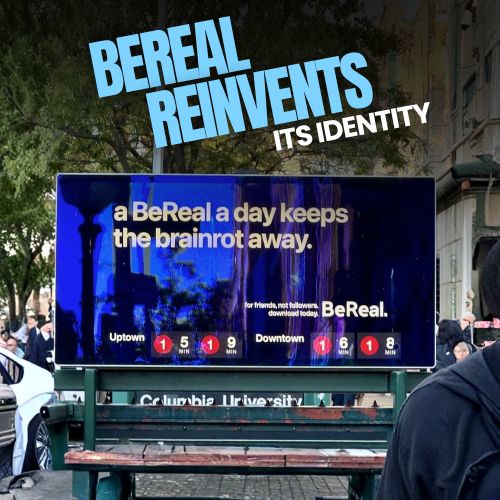
The hero execution reads “A BeReal a day keeps the brainrot away”, blending a playful twist on a familiar phrase with a sharp commentary about the current state of social media. By using the term “brainrot,” a phrase deeply rooted in Gen Z’s digital vocabulary, BeReal attempts to anchor itself back into youth culture without relying on filters, trends, or hyper-produced visuals. The creative is minimal, text-driven, and intentionally direct, allowing the message to cut through the visual clutter of urban environments.
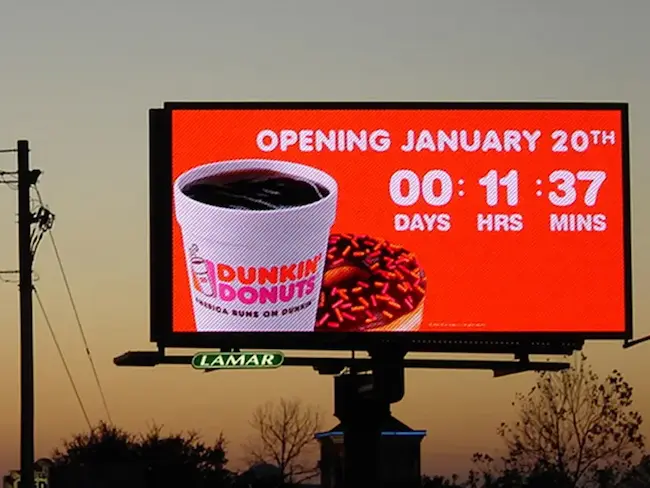
Placed on a high-visibility LED format, the ad borrows transit countdown UX patterns, a visual device that subtly enhances recall while signaling immediacy — a nod to the app’s signature “time to BeReal” alert. It’s a simple yet calculated use of OOH design.
A question of relevance, not visibility
BeReal’s challenge is not awareness. The brand achieved massive global recognition shortly after launching, capturing a moment where users were craving authenticity. Its decline came not from lack of marketing but from habit fatigue, limited features, and the rapid acceleration of competing platforms. This is why OOH alone is unlikely to reignite its growth — but it can help redefine the narrative around the brand.
By confronting “brainrot,” the campaign reframes BeReal as an antidote rather than an alternative. It positions the app not as a competitor to algorithmic feeds but as a space for slower, intentional, friend-centered connection.
Does this creative direction move the needle?
The industry conversation around this OOH suggests mixed reactions. Some appreciate the bold simplicity of the messaging, while others argue that the campaign lacks the transformative creative spark needed for a true comeback. Brands like Opal and Spotify’s Fan Life have recently shown how deeply emotional and community-driven storytelling can resonate — and some believe BeReal needs a similarly ambitious approach.
Still, the OOH strategy succeeds in one key area: it reminds people BeReal exists, and does so in a tone that feels culturally aligned rather than corporate. Whether this is enough to rekindle daily usage remains an open question.
Final thoughts
BeReal’s return to OOH marks an effort to reconnect with users through straightforward, culturally relevant messaging. The campaign is visually clean, cleverly worded, and tailored for quick impact in high-traffic locations. While it may not single-handedly revive the platform, it demonstrates the brand’s willingness to reenter the conversation and position itself again as the antidote to the overwhelming noise of algorithmic social media.
Whether “Be Real or Not?” becomes a turning point or another short-term burst of visibility will depend on how the brand evolves the product experience beyond the billboard.
FAQs about this campaign
What is BeReal’s new OOH campaign about?
It’s a clean, text-led outdoor message that reads 'A BeReal a day keeps the brainrot away', addressing digital fatigue and the current algorithm-heavy social media environment.
Why does the campaign stand out?
Because it uses simplicity, cultural language and minimalism to break through the visual noise typical of large cities. It feels more like a statement than an ad.
How does OOH contribute to the concept?
OOH becomes a medium for cultural commentary rather than conversion. The short, powerful message invites commuters to rethink their relationship with social media.
What audience is BeReal targeting?
Primarily Gen Z and young adults familiar with the idea of 'brainrot' and digital burnout, positioning BeReal as a calmer, more authentic alternative.
What can brands learn from this campaign?
That simplicity, cultural relevance and bold copy can be more effective than complex visuals. OOH can be a platform for statements, not just promotions.
Craft emotive OOH that resonates
Explore high-visibility print and OOH formats that elevate brand values and recall.