Low-cost airlines often compete within the same limited space: identical destinations, similar fares, and predictable communication. To break away from this pattern, Wingo launched a concept that no competitor could replicate — a destination that exists not on a map, but within one of the most recognizable advertising worlds in the region. In partnership with Corona, the brand introduced “Destination Ads”, transforming Corona’s iconic beach advertising into a real travel experience that consumers could actually visit.
Turning an ad into a real place
For years, Corona’s advertising has portrayed idyllic beaches that feel almost mythical — pristine, calm, and unattainable. These visuals became cultural symbols of escape, yet they remained confined to billboards, outdoor displays, and digital screens. Wingo reimagined this familiar world and turned it into a tangible destination by identifying and activating the real beaches where Corona’s advertising imagery was captured.
This strategic move positioned Wingo as the only airline capable of taking travelers to the place they had seen countless times in Corona’s campaigns. It shifted the narrative from “dreaming of being there” to “flying there,” offering a one-of-a-kind product that competitors could not imitate.
OOH that redefines desire
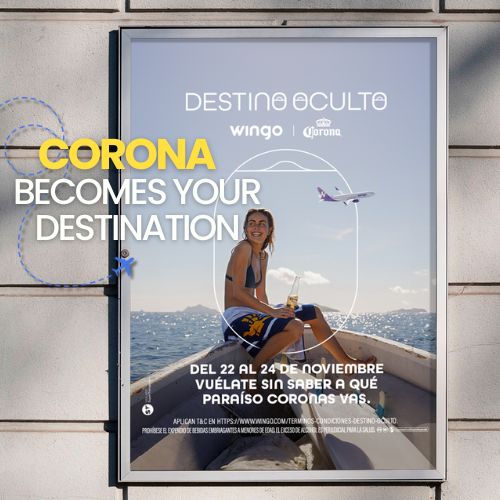
“Destination Ads” is built on the power of outdoor advertising as both a visual window and a behavioral trigger. Corona’s iconic beach imagery already holds strong emotional pull, making OOH the perfect medium to anchor the idea. By reframing the ads as real entry points to the destination, the campaign created a bridge between aspiration and action.
Placed in high-traffic locations, the creative invites passersby not just to look, but to imagine themselves stepping directly into the scene. The clean layout, natural colors, and horizon-driven composition heighten the sense of escapism while maintaining instant readability at street level.
A strategy built on exclusivity
In an industry where most low-cost airlines share nearly identical route maps, creating a proprietary destination is a differentiator with real commercial impact. By transforming Corona’s advertising landscapes into a flight offering available only through Wingo, the airline entered a category of its own. This exclusivity is not based on price or promotions, but on an experience that cannot be matched.
The campaign reframed perceived limitations of the low-cost model and turned them into a competitive advantage, elevating Wingo through storytelling, cultural relevance, and strategic partnership.
Film, print, and outdoor working in sync
Although OOH is the core of the idea, the campaign expanded across multiple formats to reinforce a cohesive narrative. Film content showcased the emotional shift from viewing an ad to stepping into it. Print executions echoed the same promise of accessibility and transformation, using Corona’s visual universe as a recognizable anchor. Together, the formats built a unified message: the destination you’ve always seen in ads is now within reach.
Every channel maintained a consistent tone — simple, aspirational, and immersive — ensuring that each touchpoint reinforced the same world and the same invitation to explore it.
Final thoughts
With “Destination Ads,” Wingo achieved something rare in the airline category: a creative concept that becomes a commercial asset. By converting Corona’s iconic advertising landscapes into a real travel product, the campaign delivered a memorable experience grounded in OOH craft, cultural insight, and strategic differentiation. It not only invited people to travel — it redefined what a destination can be.
FAQs about this campaign
What is Corona’s “Destination Ads” campaign?
It is a collaboration between Corona and airline Wingo that turns the brand’s iconic beach advertising visuals into real travel destinations that people can actually visit.
Why does the campaign stand out in OOH?
Because it goes beyond classic branding: instead of just showing an aspirational beach scene, the billboards now promote a real trip to the exact locations where the ads were originally shot.
How does outdoor advertising support the concept?
OOH works as a window into the destination. Large-format billboards and digital screens show Corona’s world and, through Wingo, connect that world to a concrete call to travel.
What makes this idea hard to copy?
Corona’s visual universe is unique and deeply recognized. By owning those locations together with Wingo, the campaign creates a travel product that other airlines cannot easily replicate.
What can brands learn from “Destination Ads”?
That strong brand worlds can become real products. When OOH is used strategically, it can move from showing a lifestyle to enabling an experience, blending storytelling, tourism and commercial impact.
Craft emotive OOH that resonates
Explore high-visibility print and OOH formats that elevate brand values and recall.