
Quick Answer
Hiscox created a campaign that intentionally looked like an advertising disaster. Crooked billboards, damaged-looking posters, and upside-down commercials became a clever way to demonstrate how business insurance helps companies survive real problems.
The Problem With Traditional Insurance Advertising
Insurance advertising has always struggled with authenticity.
Most campaigns present an unrealistic version of business ownership where everything feels stable, organized, and stress-free. The visuals are polished, the stories are optimistic, and the problems are usually simplified into neat little narratives that end with reassurance.
But real business owners know reality looks very different.
Running a company often means dealing with uncertainty every single day. Payments arrive late. Clients complain unexpectedly. Technology breaks. Employees make mistakes. Deliveries fail. Data gets lost. Plans collapse without warning.
Small business owners are constantly managing chaos behind the scenes.
That disconnect between how insurance brands communicate and how entrepreneurship actually feels created a massive creative opportunity for Hiscox.
Instead of pretending disasters never happen, the brand embraced them completely.
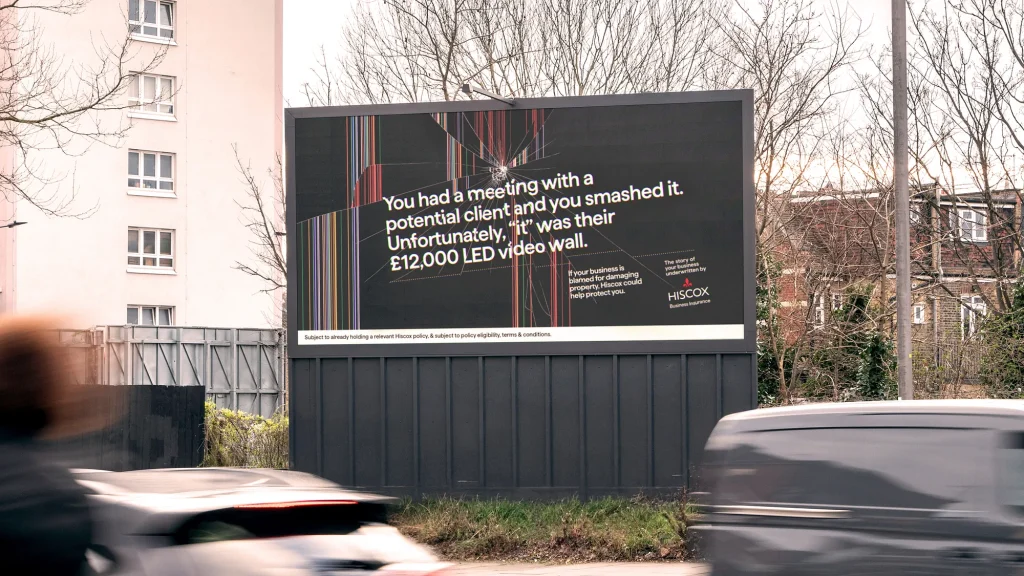
Making the Campaign Itself Feel Like a Disaster
The genius of the campaign was not simply talking about problems.
It was physically turning the advertising itself into the problem.
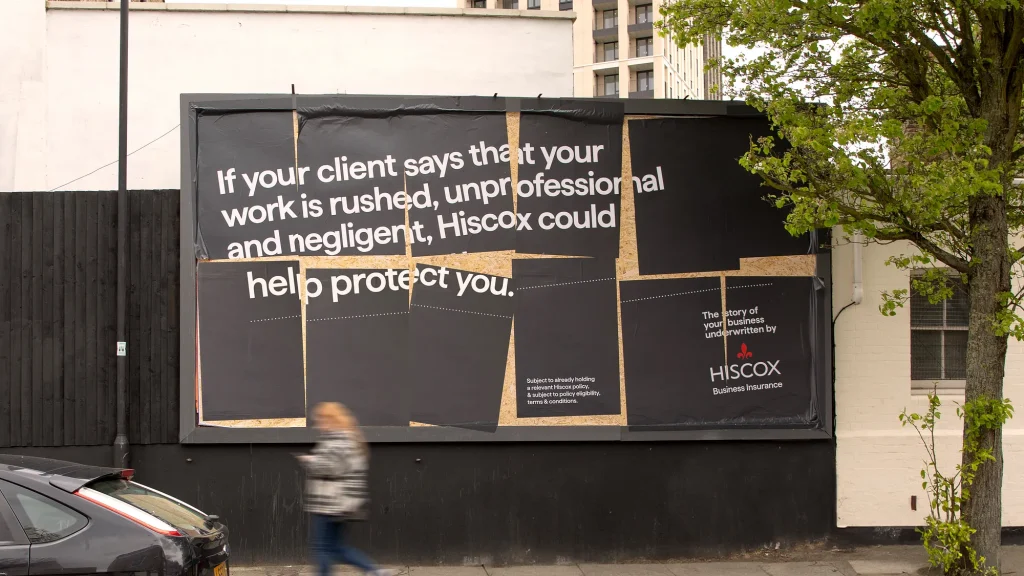
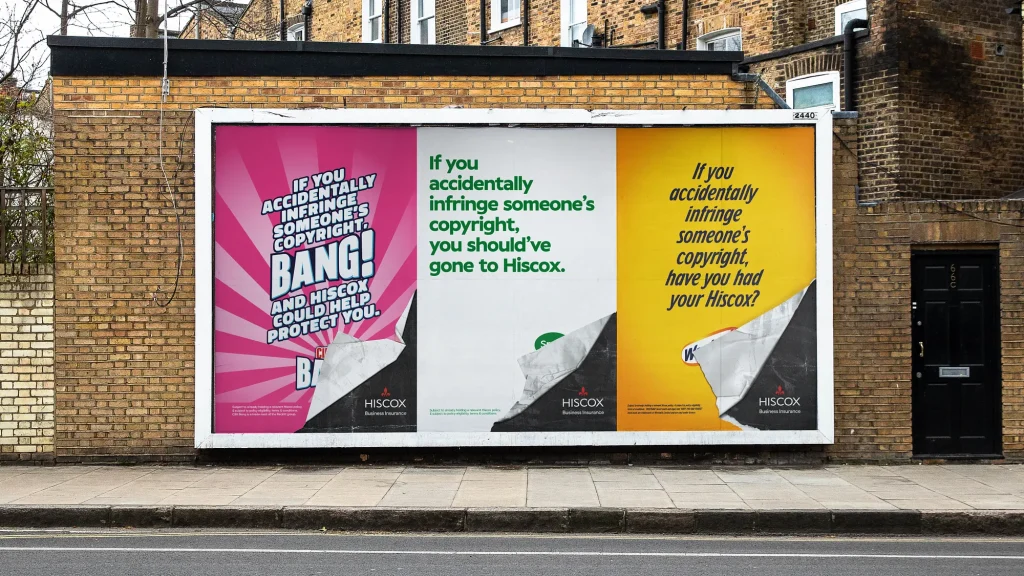
Outdoor ads were intentionally designed to appear damaged, unfinished, or incorrectly installed. Some billboards looked tilted. Others appeared dirty or poorly produced. The imperfections felt so realistic that many people likely questioned whether the media placement had failed entirely.
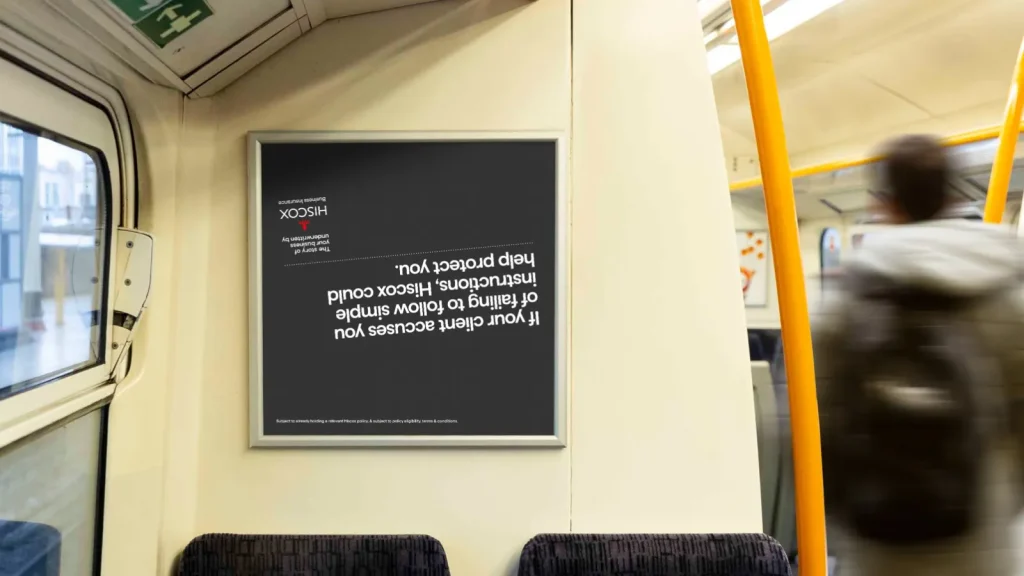
In television executions, the idea continued even further. One commercial was broadcast upside down, extending the concept beyond outdoor advertising into other media channels.
Every element reinforced the same core message:
If Hiscox claims it can help businesses survive disasters, then the brand should prove it by embracing chaos itself.
That level of commitment made the campaign feel bold, self-aware, and completely different from traditional insurance communication.
Why the Campaign Worked So Well in Outdoor Advertising
Outdoor advertising succeeds when it interrupts routine.
People walk through cities every day surrounded by visual noise. Thousands of ads compete for attention simultaneously, and most of them disappear into the background because they look predictable.
But something that appears broken immediately triggers curiosity.
A crooked billboard creates confusion. A damaged poster forces people to look twice. A strangely installed advertisement interrupts expectations because the human brain naturally notices things that seem wrong.
That split second of confusion becomes attention.
And attention is one of the most valuable currencies in modern advertising.
The Hiscox campaign understood this perfectly. Instead of trying to create visually “perfect” advertising, it created visually suspicious advertising.
People stopped because they thought they were looking at a mistake.
Then they realized the mistake was the message.
Turning Imperfection Into Brand Strategy
What makes this campaign especially intelligent is that the imperfections were not random.
Every broken-looking detail was strategically connected to the brand positioning.
The muddy visuals represented unexpected problems. The crooked installations symbolized disorder. The upside-down executions reinforced instability and unpredictability.
Nothing about the campaign felt accidental once viewers understood the idea.
That is why the work resonated so strongly. It transformed physical imperfections into storytelling devices.
Rather than hiding the uncomfortable realities of business ownership, Hiscox used those realities to create emotional honesty.
And honesty is rare in insurance advertising.
A Campaign Built for Conversation
Another reason the campaign succeeded is because it generated discussion naturally.
People shared images online because the ads looked unusual. Some viewers debated whether the installations were intentional. Others appreciated the irony of an insurance company intentionally making its own campaign appear broken.
The campaign became more than just media placement.
It became an experience.
That is one of the most powerful qualities modern outdoor advertising can achieve. Great OOH campaigns no longer function only as static visuals. The best campaigns create reactions, conversations, photographs, reposts, and public curiosity.
Hiscox transformed a simple billboard into something audiences actively wanted to talk about.
Why This Matters for the Future of OOH
The campaign also reflects a larger shift happening in advertising.
Consumers are increasingly resistant to overly polished marketing. Perfect visuals and scripted optimism often feel artificial because audiences understand brands are carefully controlling every detail.
Campaigns that acknowledge imperfection feel more human.
That does not mean advertising should look careless. It means brands are learning that authenticity sometimes comes from embracing flaws instead of hiding them.
Hiscox proved that even a conservative category like insurance can create memorable cultural impact by challenging visual expectations.
The campaign demonstrated that outdoor advertising does not always need giant technology, complex interactivity, or expensive digital effects to succeed.
Sometimes a crooked billboard can generate more attention than a flawless one.
Summary
Instead of following traditional insurance advertising, Hiscox embraced chaos. Working alongside Uncommon Creative Studio, the brand designed outdoor ads that appeared broken, muddy, or badly installed.
FAQs
Why did the Hiscox billboards look damaged?
The campaign intentionally made the ads appear broken or badly installed to represent real business disasters.
Who created the campaign?
The campaign was developed by Hiscox and Uncommon Creative Studio.
Why was the campaign successful?
It captured attention by breaking visual expectations and making people stop to question whether the ads were real mistakes.
What made the campaign different from other insurance ads?
Most insurance advertising focuses on perfection and safety, while this campaign embraced chaos and imperfection.
Frequently Asked Questions
The campaign intentionally made the ads appear broken or badly installed to represent real business disasters.
The campaign was developed by Hiscox and Uncommon Creative Studio.
It captured attention by breaking visual expectations and making people stop to question whether the ads were real mistakes.
Most insurance advertising focuses on perfection and safety, while this campaign embraced chaos and imperfection.
Ready to advertise outdoors?
BM Outdoor plans, buys and prints OOH campaigns across all 50 states. Request a free quote with no commitment.


Comments
Be the first to comment.