What Happened to KitKat?
In late March 2026, Nestlé reported the theft of a large shipment of KitKat products. The incident occurred while a truck was transporting chocolate from a factory in central Italy to Poland.
According to the company, the vehicle was carrying more than 12 tons of chocolate, equivalent to approximately 413,793 KitKat bars. The case was handed over to local authorities, who launched an investigation to determine what happened.
From Incident to Idea
Instead of letting the story fade as a supply chain issue, KitKat saw an opportunity. Weeks after the incident, the brand reinterpreted the situation as a creative concept.
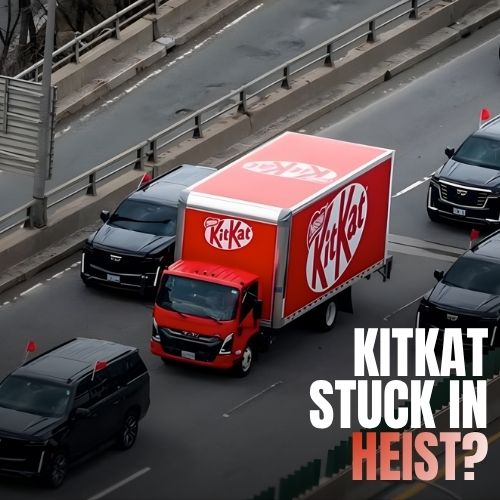
The result was an activation in Toronto, developed by Courage Inc., where a truck loaded with KitKat products was escorted through the city as if it were carrying something extremely valuable. The convoy-like setup immediately caught public attention and sparked curiosity among passersby.

A Campaign Built on Humor and Context
The brilliance of the idea lies in its tone. Rather than addressing the theft seriously, KitKat leaned into humor. By exaggerating the importance of the chocolate cargo, the brand created a playful narrative that aligned perfectly with its lighthearted identity.
At the same time, the activation connected seamlessly with the Easter season, a key moment for chocolate consumption. This ensured that the campaign was not only entertaining but also commercially relevant.
Turning News Into Visibility
What makes this activation particularly effective is how it extends the life of a news story. The original theft took place in Europe, but the campaign brought the conversation to Canada, giving it a new context and audience.
By doing so, KitKat transformed a negative event into a positive brand moment. The story evolved from a logistical issue into a public spectacle that people could see, share, and talk about.

Final Insight
KitKat’s activation demonstrates how brands can respond creatively to unexpected situations. Instead of ignoring or downplaying the incident, the brand amplified it in a way that felt entertaining and on-brand.
In a landscape where attention is everything, turning real-world events into engaging experiences can be more powerful than traditional advertising.
Summary
After Nestlé reported the theft of more than 12 tons of KitKat chocolate in Europe, the brand reimagined the incident as a creative campaign. Instead of ignoring the situation, KitKat amplified it through a public activation in Toronto, where a truck carrying chocolate was escorted like a high-value asset.
The campaign, developed by Courage Inc., used humor to connect with audiences and aligned with the Easter season, a key sales period for chocolate brands. By shifting the narrative from crisis to entertainment, KitKat successfully extended the life of the story and generated widespread attention.
Sources
Frequently Asked Questions
A truck carrying over 12 tons of KitKat chocolate was stolen while en route from Italy to Poland.
The brand turned the situation into a marketing activation by staging a convoy-style escort in Toronto.
The activation was created by Courage Inc., a creative agency based in Canada.
It used humor and real-world context to transform a negative event into an engaging and shareable experience.
Unexpected situations can become powerful marketing opportunities when approached creatively.
Ready to advertise outdoors?
BM Outdoor plans, buys and prints OOH campaigns across all 50 states. Request a free quote with no commitment.




















Comments
Be the first to comment.