What is this campaign about?
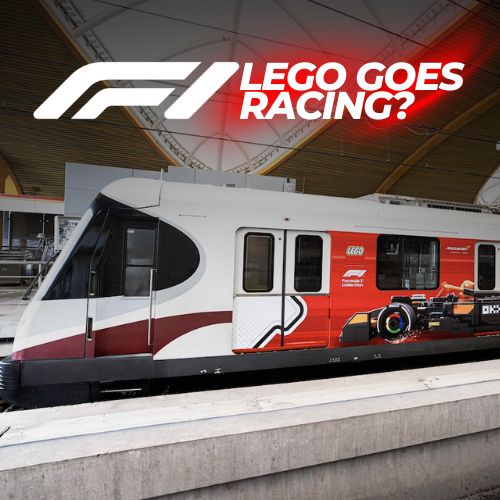
This campaign is about LEGO China turning public transportation into an immersive Formula 1 experience to celebrate the return of the Chinese Grand Prix. Instead of using a traditional ad format, LEGO transformed Shanghai’s Metro Line 11 into a moving racing-themed activation that connects the city with the Shanghai International Circuit.
The idea is to make the journey itself feel like part of the event. Rather than simply placing posters or branding in the train, LEGO reimagined the entire metro line as a Formula 1-inspired world.
Why is Shanghai Metro Line 11 important?
Metro Line 11 is especially relevant because it links central Shanghai with the Shanghai International Circuit, where the Chinese Grand Prix takes place. That makes the location highly strategic. The train is not just carrying passengers in general; it is carrying commuters and racing fans along a route directly tied to Formula 1.
This gives the campaign a strong sense of context. The activation feels connected to the city, the event, and the audience, which makes it more memorable and more meaningful.

What did LEGO change on the outside of the train?
On the outside, the metro was designed to look like a full-length Formula 1 car moving through the city. This creates the illusion that the train itself is racing along the tracks. It turns an ordinary commute into something visually dramatic and highly shareable.
The outside design is important because it makes the campaign instantly visible to anyone who sees the train. It works as a large-scale moving billboard, but in a much more creative and entertaining way.
What happens inside the train?
Inside the carriages, commuters enter spaces inspired by LEGO-built Formula 1 pit garages. This extends the concept beyond exterior branding and turns the interior into part of the storytelling.
Instead of just seeing ads, passengers are surrounded by a themed environment. That makes the experience more immersive and gives people a reason to photograph it, talk about it, and share it online.

What makes the campaign more interactive?
One of the most engaging parts of the activation is the inclusion of more than 20 hidden Easter eggs. These small details reward fans who know the culture of Formula 1 and encourage social sharing. References like Roscoe’s paw prints and a T-pose George Russell minifigure are designed to connect with dedicated fans in a playful way.
This approach gives the campaign another layer. It is not only visually impressive, but also interactive and community-driven, because fans can discover details and discuss them online.
How does the campaign extend beyond the train?
The experience continues at the station, where moments from Formula 1 history were recreated using 550,000 LEGO bricks. This takes the activation beyond transit media and turns it into a larger branded environment.
By doing this, LEGO creates a full journey rather than a single visual stunt. People see the branded train, ride through the themed interior, and then arrive at a station that continues the story through large-scale LEGO installations.

Why is the Chongqing train reference important?
The campaign also references Chongqing’s famous Line 2 train, which is known for passing through a residential building. Reimagining that rail icon as an F1 train adds another layer of playfulness and cultural relevance.
This detail helps the campaign feel more rooted in China rather than being a generic motorsport promotion. It mixes global Formula 1 culture with local visual references that many people already recognize.
Why does this campaign stand out?
What makes this campaign stand out is that it transforms an everyday space into an entertainment experience. It does not rely only on branding or logos. Instead, it uses scale, location, immersion, and fandom to create something people want to experience and share.
It is also a strong example of experiential advertising because it blends transportation, sports culture, and LEGO’s playful identity into one cohesive idea.
Summary
LEGO China launched a creative activation that transforms Shanghai’s Metro Line 11 into a Formula 1-themed train celebrating the return of the Chinese Grand Prix. Created by OLA (Our LEGO Agency), the brand’s in-house creative team, the train appears from the outside as a full-length F1 car racing through the city.
Inside the carriages, commuters step into LEGO-built Formula 1 pit garages filled with playful details and hidden Easter eggs for fans. The campaign also includes large installations at the station recreating iconic moments from Formula 1 history using more than 550,000 LEGO bricks.
Frequently Asked Questions
The activation celebrates the return of the Chinese Grand Prix and connects the city with the Shanghai International Circuit through a themed commuter experience.
The exterior makes the metro look like a full Formula 1 race car, while the interior recreates LEGO-built pit garages.
Passengers can discover more than 20 hidden Easter eggs referencing Formula 1 culture and LEGO characters.
Ready to advertise outdoors?
BM Outdoor plans, buys and prints OOH campaigns across all 50 states. Request a free quote with no commitment.






Comments
Be the first to comment.