
Moonpig & Heart Turn Valentine’s Day Into a Public Love Letter
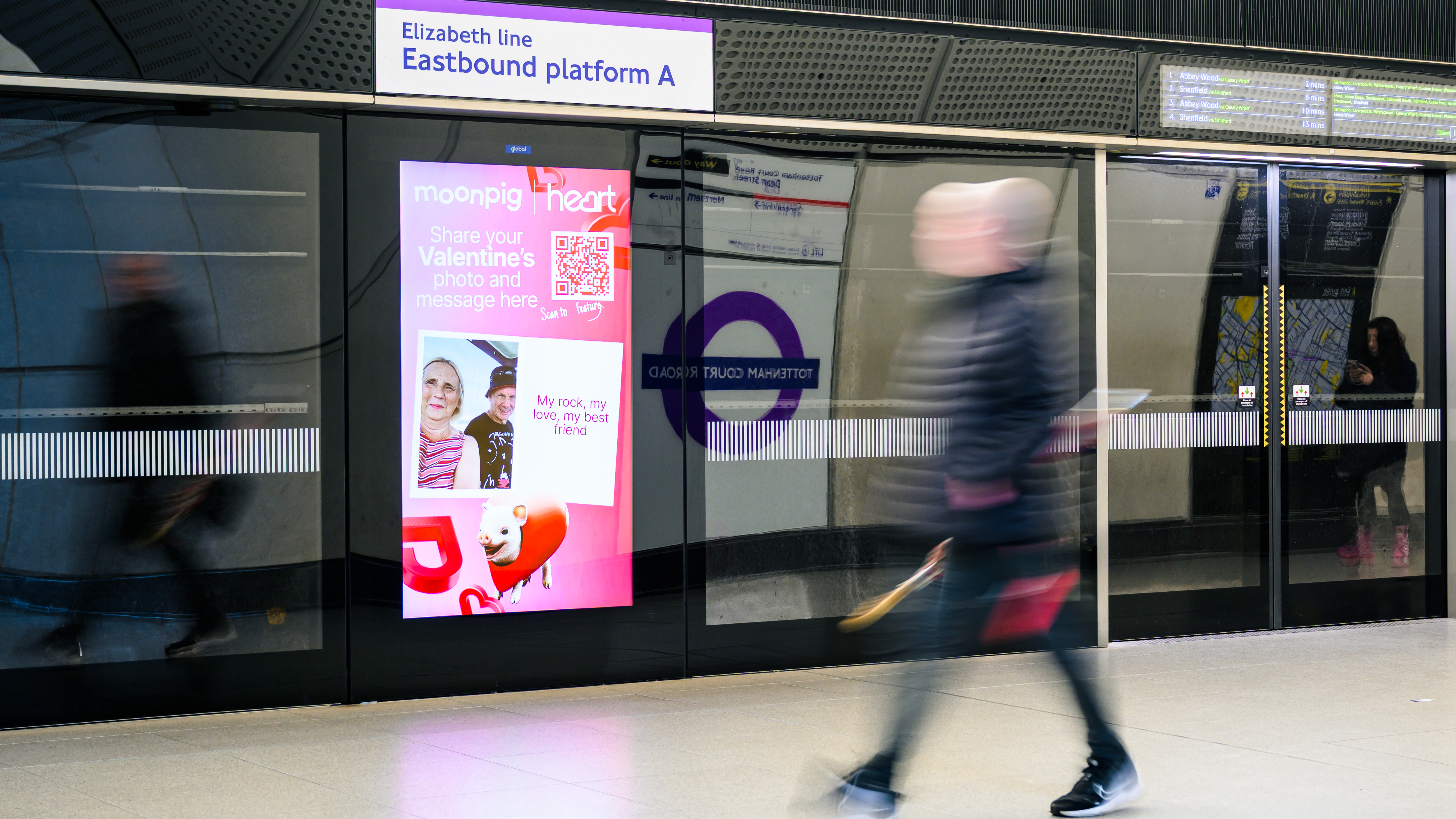
Valentine’s Day advertising usually lives in private spaces—DMs, inboxes, and social feeds. Moonpig chose to flip that logic and bring love into the open. In partnership with Heart, the brand transformed digital out-of-home screens into living love notes, turning everyday commutes into shared emotional moments.
By placing real photos and messages in high-traffic transit environments, the campaign reimagines OOH not as background noise, but as a human connection point.
When OOH becomes emotional, not just visible
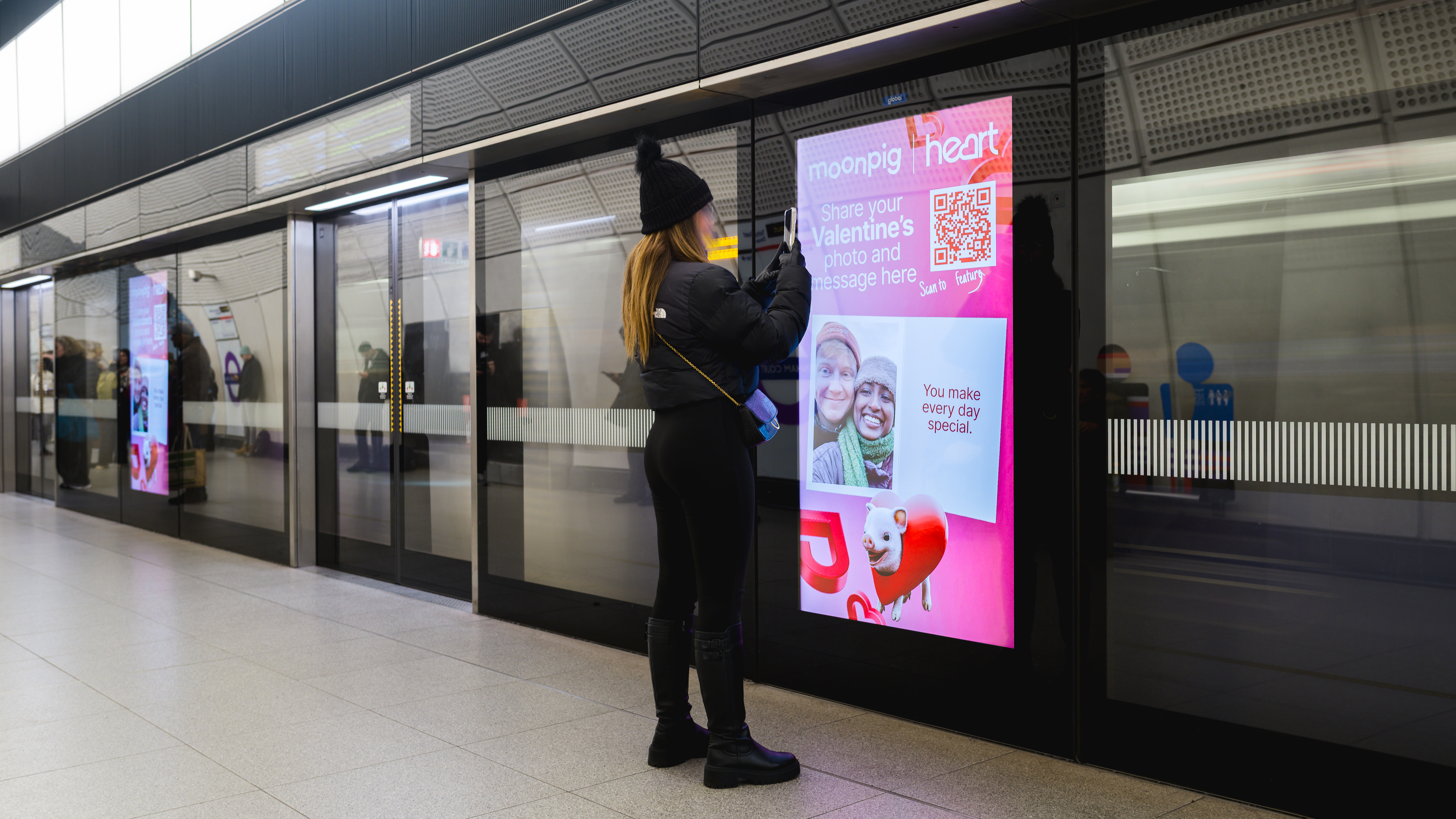
At first glance, the execution is simple: a Valentine’s-themed DOOH screen, a heartfelt message, a photo, and a QR code. But the power lies in authenticity. These aren’t scripted lines or polished brand visuals—they’re real words from real people. That shift instantly changes how the audience relates to the screen. It’s no longer advertising to ignore; it’s a moment to pause and feel.
Participation as the creative engine
The QR code isn’t a secondary feature—it’s the idea itself. Commuters are invited to upload their own Valentine’s photos and messages, which then appear on screen for everyone to see. This reverses the traditional OOH dynamic. The brand steps back, and the public becomes the voice. Moonpig doesn’t tell a story—it enables thousands of them.
Why it works so well in transit spaces
Transit environments are emotionally neutral by default. People are waiting, moving, scrolling. Introducing warmth and vulnerability into that space creates contrast, and contrast creates attention. Seeing a genuine message of love during a commute disrupts the routine and humanizes the environment. The message feels unexpected, honest, and memorable—exactly where OOH performs best.
A modern approach to Valentine’s marketing
Rather than pushing discounts, urgency, or product features, Moonpig focuses on meaning. The product becomes secondary to the emotion it facilitates. Instead of saying “buy a card,” the campaign quietly shows why expressing love still matters—and why it’s worth sharing.
Why this campaign matters
Moonpig’s Valentine’s OOH proves that digital out-of-home can be personal without being private. It shows that interactivity doesn’t need complexity, only purpose. And it reminds us that public spaces can carry real emotion when brands are willing to give up control. By putting people at the center, Moonpig turns Valentine’s Day into a collective experience—one message, one photo, one moment at a time.
Summary
Instead of keeping Valentine’s messages private, Moonpig brought them into public space.
In collaboration with Heart, the brand turned digital out-of-home screens into living love notes powered by real people.
Commuters could scan a QR code to upload photos and messages that appeared instantly on screen.
The campaign repositions OOH as an emotional medium, not just a visible one.
By stepping back and letting people speak, Moonpig creates authenticity at scale.
Sources
Frequently Asked Questions
It’s an interactive DOOH activation that allows people to share real Valentine’s photos and messages in public spaces.
The campaign is a collaboration between Moonpig and Heart, leveraging radio and outdoor media.
QR codes enable direct participation, turning passersby into contributors rather than passive viewers.
Because it introduces warmth and emotion into spaces that are usually neutral and routine, creating strong contrast and memorability.
Instead of promoting products or discounts, it focuses on real emotion and shared human connection.
Ready to advertise outdoors?
BM Outdoor plans, buys and prints OOH campaigns across all 50 states. Request a free quote with no commitment.















Comments
Be the first to comment.