PlayStation has taken Japanese art to the streets of Spain with a striking out-of-home (OOH) campaign for “Ghost of Yōtei.” The brand reimagines the traditional figure of El Afilador (The Knife Sharpener), transforming him into a symbol of precision, justice, and narrative for its new PlayStation 5 exclusive.
What’s the idea behind this campaign?
The concept bridges the ancient craft of sharpening with the spirit of the video game. Under the tagline “The Sharpest Weapons,” real knife sharpeners toured Spanish cities, turning their iconic whistle into a call for justice and mastery—a metaphor for the journey of Atsu, the game’s main character. It’s a fusion of tradition and digital culture that cuts through daily routine with ingenuity and meaning.
How was the idea executed?
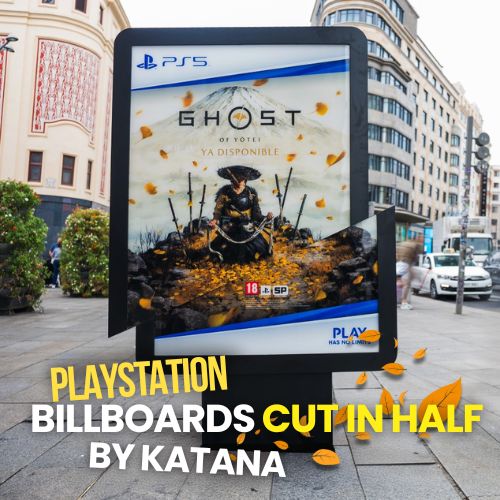
Conceived by CLV Agency, with media handled by Mediacom and production by We Are CP, the campaign unfolded across multiple layers. Street-level activations featured real knife sharpeners, OOH installations included billboards and mupis designed to look sliced by a katana, and a sensory collaboration with chef Jordi Roca brought the experience to life. Each execution embodied the values of the game — precision, elegance, and revenge — in a tangible and memorable way.
Why is this execution unique?
The campaign merges Spanish folklore with Japanese aesthetics through craftsmanship and visual storytelling. Through sound, motion, and design, PlayStation turns Ghost of Yōtei into a living urban legend. The “cut” becomes both a visual and symbolic metaphor — representing precision, transformation, and inner balance.
How does it connect with audiences?
By reviving an iconic figure of Spanish culture, PlayStation establishes an emotional bond with local audiences while immersing them in a Japanese narrative universe. The combination of sound, visuals, and story awakens nostalgia and curiosity, making the world of Ghost of Yōtei feel tangible beyond the screen.
Final thoughts: When culture meets gaming
Ghost of Yōtei redefines how video games and culture can coexist in real-world spaces. Through the whistle of the knife sharpener, the katana-cut billboards, and immersive experiences, PlayStation showcases the storytelling power of OOH advertising and street marketing. More than a launch, it’s a living performance that blends tradition, art, and emotion — reminding us that the sharpest stories cut straight to the heart.
FAQs about this campaign
What is PlayStation’s ‘Ghost of Yōtei’ campaign about?
It reimagines the traditional Spanish knife sharpener and Japanese aesthetics to launch the game, using mupis that look ‘sliced’ by a katana and urban activations that take the story to the streets.
Who executed the campaign?
The idea was developed by CLV; media was handled by Mediacom; production by We Are CP, with a sensory collaboration from chef Jordi Roca.
Where did it run and which OOH formats were used?
Across Spanish cities, highlighting an immersive installation at Madrid’s Atocha Station and katana-sliced mupis, plus street-level actions with real knife sharpeners.
Why does this execution stand out?
It fuses Spanish folklore and Japanese culture through craft and physical design, turning the ‘cut’ into a visual metaphor for precision, transformation, and inner quest.
What can brands learn from it?
OOH can be performance: when creativity roots in cultural symbols and sensory experience, the street becomes a living medium that amplifies narrative and connection.
Craft emotive OOH that resonates
Explore high-visibility print and OOH formats that elevate brand values and recall.
Comments
Be the first to comment.