Ad Council Exposes Myths Behind Driving High · 2025-11-26 · 4 min read · By Zanni GA — BM Outdoor
Ad Council Exposes Myths Behind Driving High
Zanni GA — BM Outdoor 2025-11-26 4 min read#OOH#Outdoor Advertising
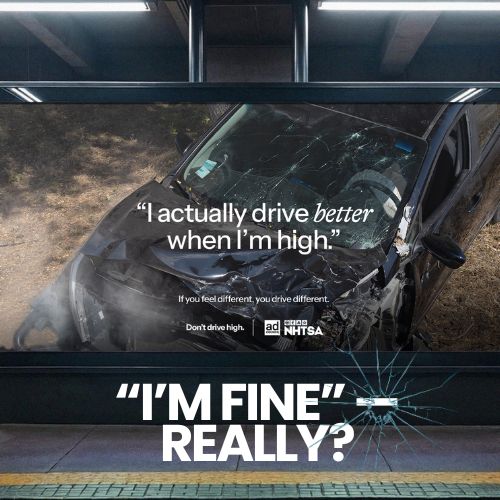
Quick answer: The Ad Council’s campaign exposes everyday excuses about driving high by pairing them with real-world consequences, using OOH to show that drug-impaired driving is still impaired driving.
Frequently Asked Questions
It’s a drug-impaired driving prevention campaign that challenges common excuses people use to justify driving while high, showing how those beliefs collapse when confronted with real-life consequences.
Because it uses simple, conversational quotes paired with stark visual contrasts, turning familiar phrases into uncomfortable truths that are impossible to ignore in public spaces.
By placing the creatives on billboards, transit, and other outdoor formats, the campaign reaches drivers in real time, transforming everyday environments into reminders that driving high is still impaired driving.
It challenges ideas like “weed helps me focus,” “I drive better high,” or “it’s safer than alcohol,” reframing them as dangerous distortions that put lives at risk.
That using honest, relatable language and strong visual contrast in OOH can effectively shift perceptions, spark debate, and turn casual beliefs into moments of reflection and behavior change.
Bottom line: In this drug-impaired driving prevention campaign, the Ad Council takes casual phrases like “I drive better high” or “It’s safer than driving drunk” and drags them into the harsh light of reality. Through sharp, minimalist OOH and supporting media, the work contrasts pseudo-scientific justifications with the real consequences of impaired driving — crashes, legal trouble, and irreversible loss. The result is a clear, culturally relevant message: impairment is impairment, and no excuse is strong enough to justify getting behind the wheel while high.
Ready to advertise outdoors?
BM Outdoor plans, buys and prints OOH campaigns across all 50 states. Request a free quote with no commitment.
Explore key OOH formats by category and jump into details for specs, placements, and availability.
Billboards
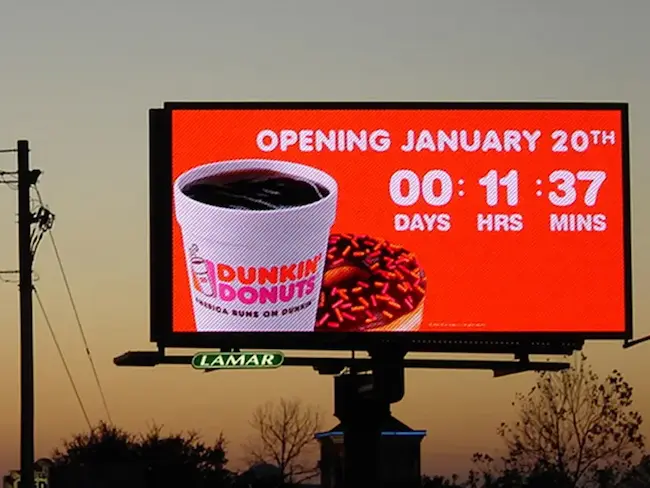
Billboards are large outdoor advertising structures that attract attention from drivers and pedestrians. They provide an excellent platform for brands to showcase their message to a wide audience.
Posters are versatile advertising formats typically used in high-traffic areas. They can effectively convey promotional messages or branding with striking visuals.
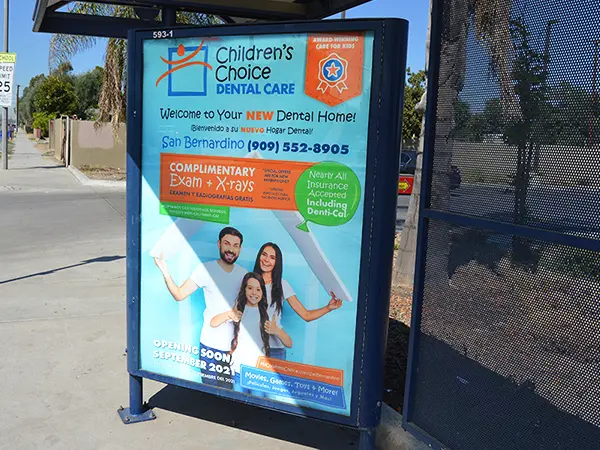
Transit advertising takes advantage of public transport systems to reach commuters. It includes ads on buses, subway stations, and shelters, ensuring maximum visibility to a diverse audience.
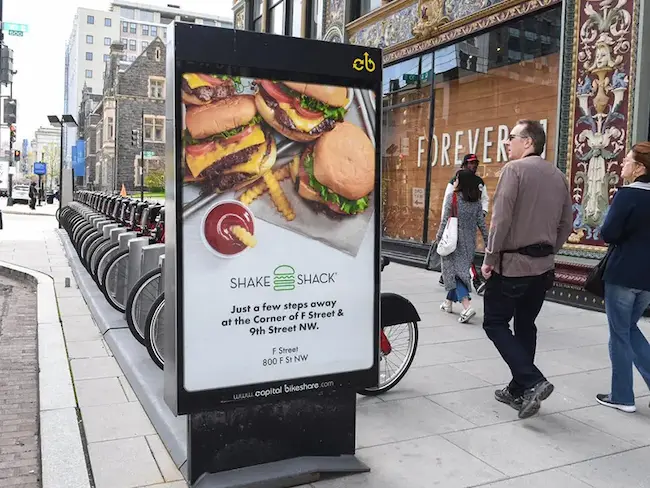
Specialty advertising encompasses unique formats, such as murals and kiosks, which can provide a creative and engaging way to connect with consumers in specific locations.












Comments
Be the first to comment.