
When a product becomes irresistible… even from a distance
In a world saturated with stimuli, very few campaigns manage to truly stop people in their tracks. That’s exactly what Cornetto Max achieves with its latest out-of-home execution: a visual so provocative it almost feels tangible.
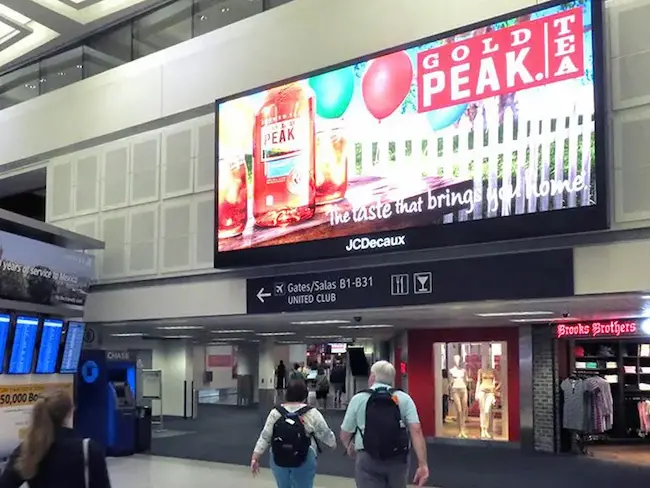
Placed in high-traffic urban furniture and executed by JCDecaux, the campaign showcases two standout flavors, Hazelnut & Chocolate and Pistachio. Instead of relying on complex storytelling or heavy copy, the brand leans into a simple but powerful idea: let the product do all the talking.
The power of detail that triggers desire
The creative approach is built on hyperrealism. The melting chocolate and flowing pistachio cream are captured with such precision that they create a nearly tactile illusion. This is not just about showing an ice cream, it’s about making people feel it.
This execution taps into a key truth of modern OOH: when the product looks irresistible, the message doesn’t need explanation. The visual becomes the argument, and craving becomes the response.

Minimalism that amplifies impact
The campaign strips away anything unnecessary. Clean backgrounds allow textures and colors to stand out, while the branding remains present without overpowering the visual. The result is a balanced composition that captures attention within seconds, exactly the window a passerby gives to an outdoor ad.
This is not just an aesthetic choice, but a strategic one. In OOH, clarity drives memorability, and memorability drives effectiveness.
Urban context as a trigger for action
Positioned in pedestrian-heavy areas, the campaign meets people in everyday moments when they are most receptive. It doesn’t interrupt, it integrates. It doesn’t push, it invites.
This is where OOH outperforms many other channels: it reaches consumers at the exact moment when a decision can quickly turn into action. A craving sparked on the street can lead to a purchase just minutes later.

When advertising stops feeling like advertising
What makes this campaign stand out is how natural it feels. Rather than being intrusive, it acts as a visual pause within the rhythm of the city, connecting through sensation instead of persuasion.
That’s the difference between seeing an ad and wanting what it shows. When a campaign achieves that level of connection, it stops being just communication and becomes an experience.
Summary
Cornetto Max’s latest outdoor campaign demonstrates how visual simplicity can outperform complex messaging. By focusing entirely on texture, flow, and indulgence, the brand creates a sensory-driven experience through static media. The use of hyperrealism transforms the billboard into an almost tactile moment, capturing attention in seconds. Strategically placed in high-footfall areas, the campaign connects with consumers at the exact moment cravings can turn into action. It’s a clear example of how OOH can move beyond awareness and drive immediate desire.
Frequently Asked Questions
Its hyperrealistic visuals and minimal copy make the product instantly appealing and easy to process in seconds.
It enhances sensory perception, making viewers almost “taste” the product visually, which increases craving and recall.
The campaign runs on urban furniture managed by JCDecaux, ensuring high visibility.
A strong product visual, clear message, and strategic placement can outperform overly complex creative concepts.
Ready to advertise outdoors?
BM Outdoor plans, buys and prints OOH campaigns across all 50 states. Request a free quote with no commitment.







Comments
Be the first to comment.