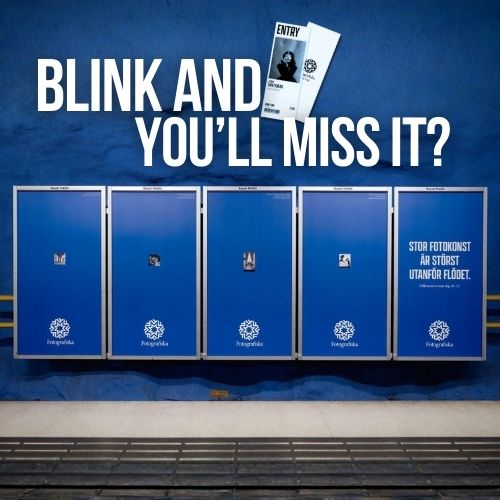
How Fotografiska Turned Size Into the Message
The campaign starts from a simple cultural truth: today, much of art is consumed through phones. Photographs, paintings, and visual culture are constantly reduced to the dimensions of a social media post, where detail, scale, and atmosphere disappear.
Instead of merely saying that art deserves more space, Fotografiska made that loss visible. By placing very small images inside large outdoor advertising formats, the campaign transforms scale into the core message.
An Out-of-Home Campaign Against Screen-Based Art Consumption
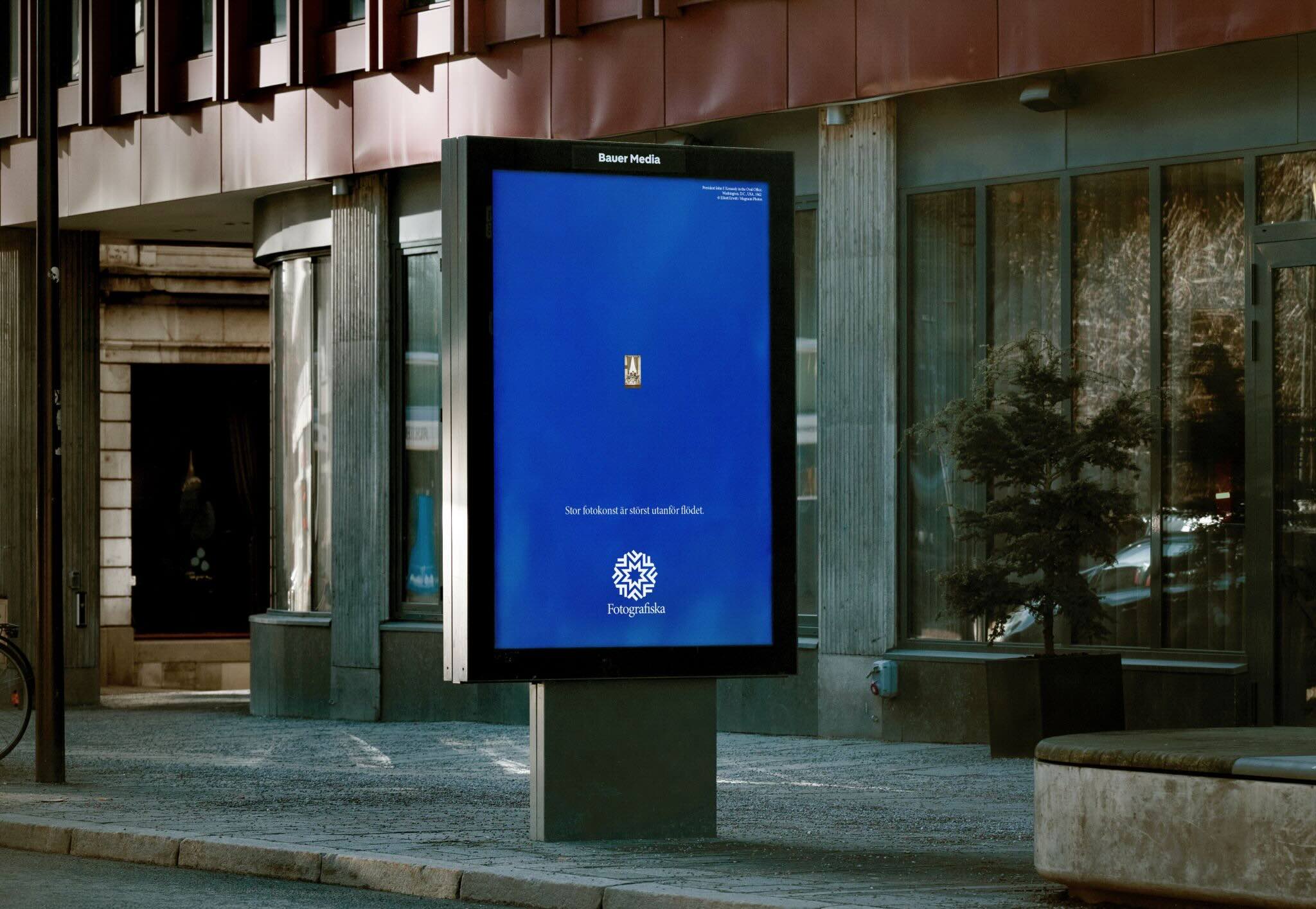
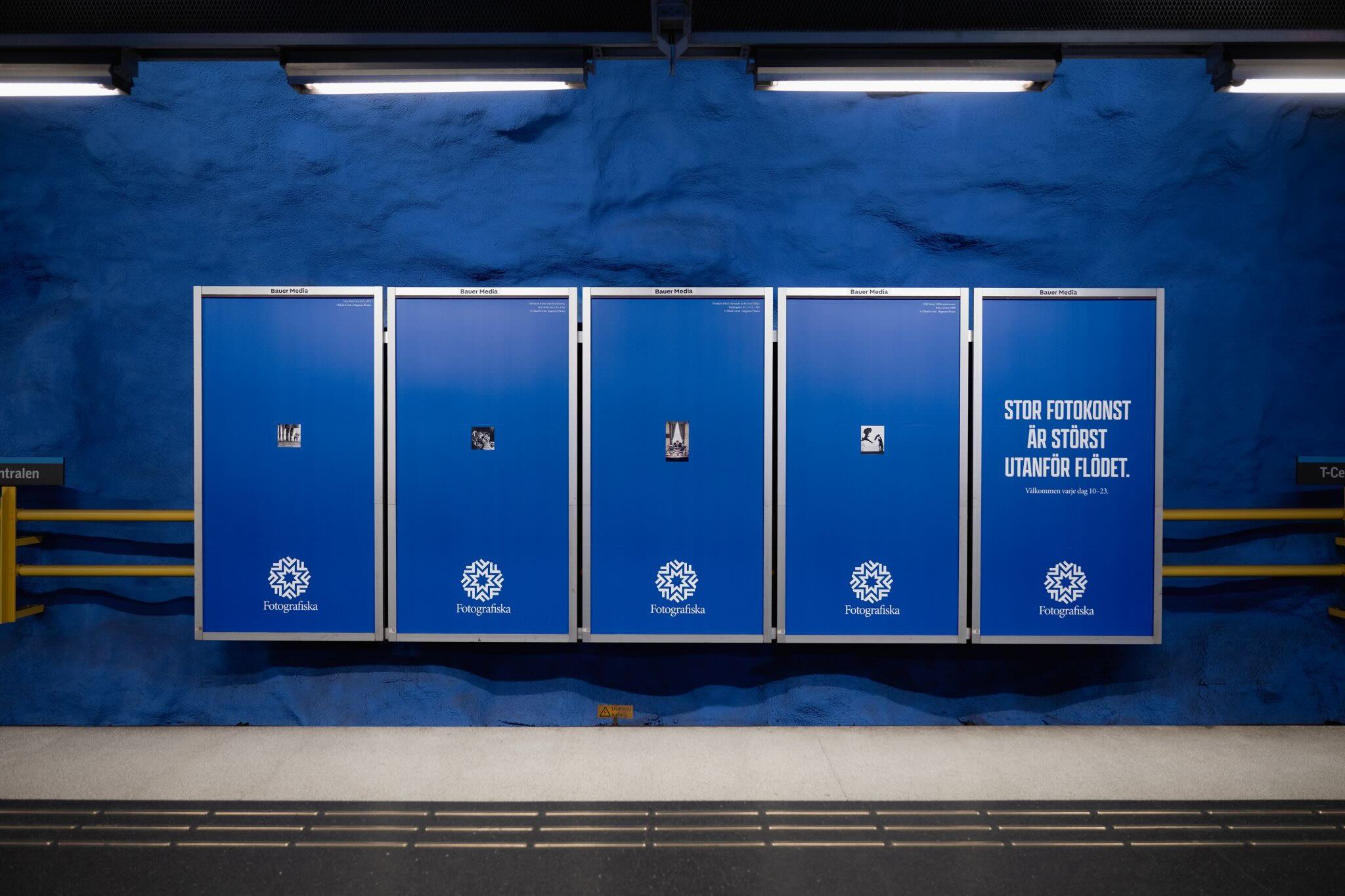
Rather than filling billboards, shelters, and posters with oversized visuals, Fotografiska does the opposite. The photographs appear tiny within the ad space, almost lost in the format, mirroring how art is often experienced on mobile screens.
That contrast makes the campaign instantly understandable. Before reading a single line, viewers can already feel the point: photography shrinks when it is consumed only through digital platforms.
Tiny Images That Defend the In-Person Experience
The campaign features photographs by Elliott Erwitt, whose works are part of Fotografiska’s collection. Displayed at a size that resembles how they might appear on a phone, the images seem visually diminished against the scale of the outdoor medium.
That creative decision turns what looks like emptiness into meaning. The blank space around the image is not wasted space; it is what makes the argument stronger. It shows how much is missing when photography is reduced to a small digital frame.
Why This Outdoor Campaign Works So Well
One of the smartest aspects of the execution is that it uses the medium itself as proof of the idea. Outdoor advertising is usually about maximizing presence, scale, and visual dominance. Fotografiska reverses that logic to make viewers notice absence instead of abundance.
That reversal is what gives the campaign its power. It feels restrained, intelligent, and culturally relevant, especially at a time when many people are actively looking for experiences beyond endless scrolling.
The Role of the Line “Photography Deserves More Than Your Wall”
The line reinforces the concept with clarity and attitude. It speaks directly to the way people consume images through social platforms while also positioning Fotografiska as a place where photography can be seen the way it was meant to be seen.
It is effective because it feels both critical and invitational. The campaign does not just reject digital behavior; it offers a better alternative through physical experience.
What Brands and Museums Can Learn From This Execution
This campaign proves that impact in out-of-home does not always come from filling every inch of space. Sometimes the most powerful visual move is restraint, especially when that restraint is tied to a strong strategic insight.
For museums, cultural brands, and even lifestyle advertisers, Fotografiska offers a valuable lesson: when the idea is strong enough, the format itself can become part of the storytelling.
Summary
The campaign turns scale into the message. Instead of filling outdoor placements with oversized visuals, Fotografiska deliberately shrinks the artwork to the size it might appear on a phone, making the images feel almost lost inside the media space.
That visual restraint supports the line “Photography deserves more than your feed,” which reframes the museum visit as a richer alternative to screen-based culture. The featured works come from Elliott Erwitt, whose retrospective Through the Playful Eyes of Elliott Erwitt is on view at Fotografiska Stockholm from February 13 to May 17, 2026.
Frequently Asked Questions
The campaign shows that photography loses meaning when it is reduced to screen size and that it is better experienced in person.
They are intentionally sized to resemble how photography is often viewed on phones and social media feeds.
The campaign used street furniture formats such as bus shelters, posters, and other outdoor advertising placements in Stockholm.
Ready to advertise outdoors?
BM Outdoor plans, buys and prints OOH campaigns across all 50 states. Request a free quote with no commitment.



Comments
Be the first to comment.