
The real danger isn’t speed—it’s pressure
Most speeding doesn’t begin with intention. It doesn’t start with a conscious decision to break the rules or take risks. Instead, it starts with a feeling—subtle at first, then increasingly hard to ignore. A car tailgating too closely. Headlights flashing in the rearview mirror. A sense that someone behind you is impatient, annoyed, or silently demanding that you move faster.
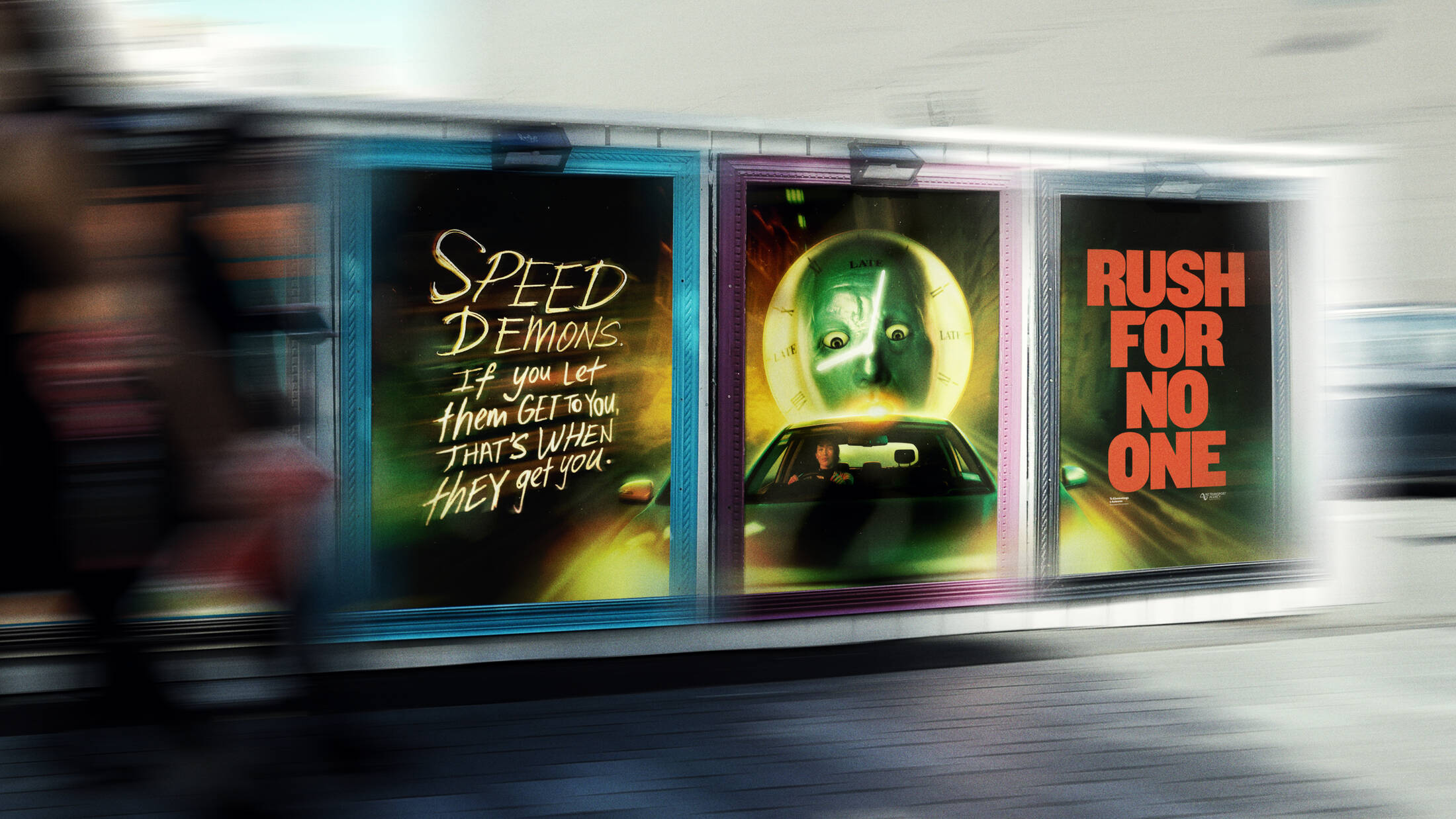
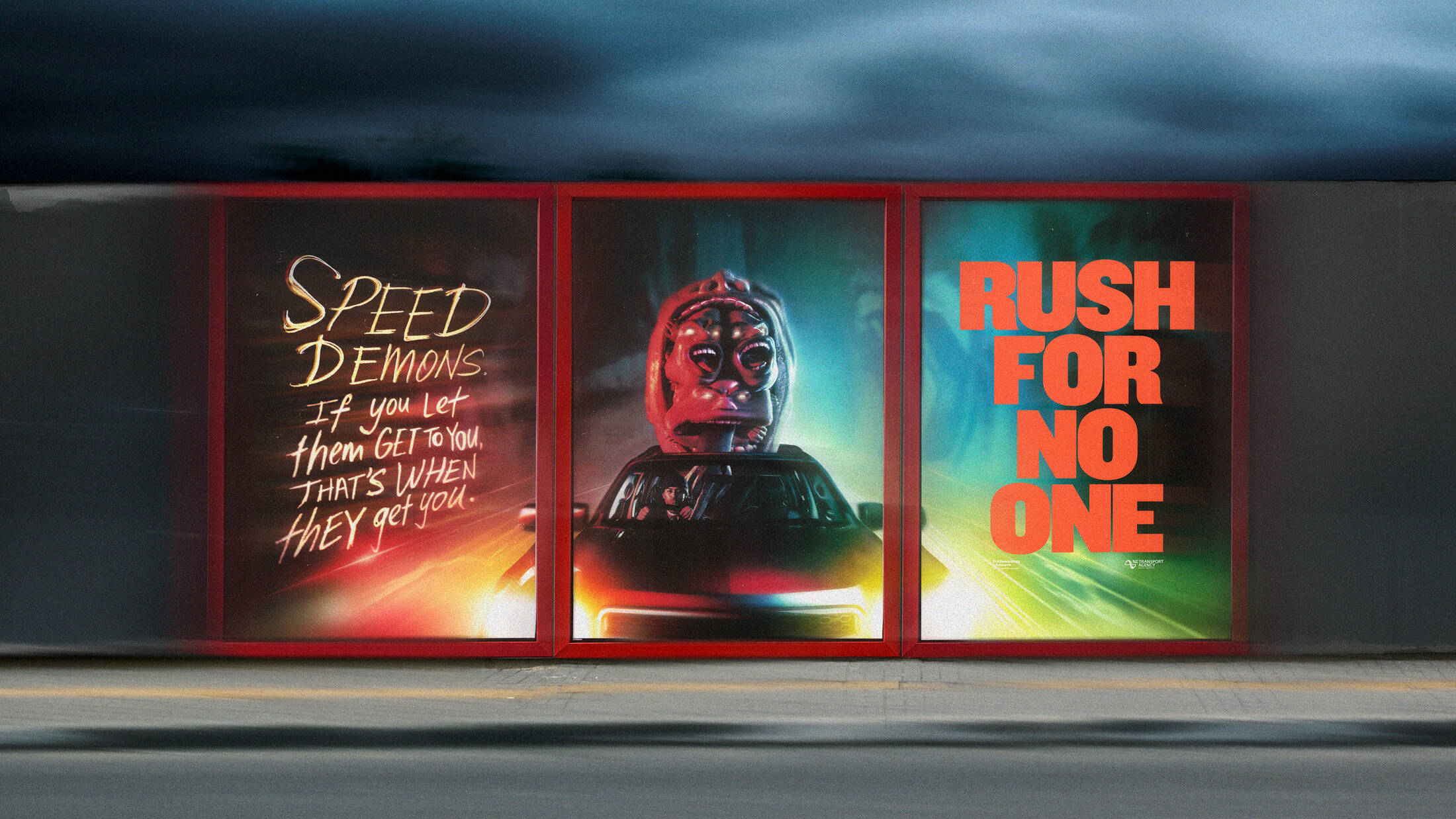
Speed Demons takes that invisible psychological pressure and gives it a literal presence. By turning pressure into a physical entity, the campaign makes something abstract suddenly visible. It reframes speeding not as a personality flaw or reckless impulse, but as a moment of influence—one where drivers allow external forces to override their own judgment. In doing so, it empowers drivers to recognize that moment and choose differently.
Why the metaphor works
The genius of Speed Demons lies in its metaphor. By visualizing pressure as “demons,” the campaign externalizes the problem rather than blaming the individual. Drivers aren’t portrayed as irresponsible, careless, or dangerous. They’re portrayed as human—susceptible to influence, emotion, and social cues.
This distinction matters. Traditional road safety campaigns often rely on shame, fear, or authority. Speed Demons takes a more empathetic approach. The villain isn’t the driver—it’s the pressure they allow in. That framing reduces defensiveness and increases self-awareness, making the message more relatable and far more likely to stick.
OOH as the perfect medium
Outdoor advertising is uniquely suited to this idea. Like driving itself, OOH is unavoidable, fast, and public. There’s no skip button, no sound required, and no time for explanation. Speed Demons leans into this reality with bold visuals and minimal copy that can be processed in seconds.
Whether seen on a roadside billboard, a large-format urban placement, or a high-traffic corridor, the message lands instantly. Drivers don’t need context or backstory—they feel it immediately. The medium mirrors the moment the campaign is addressing, making the experience feel timely, relevant, and personal.
Film and design reinforcing one idea
Across film, design, and OOH, Speed Demons maintains a tightly controlled creative language. The tone is dark, tense, and psychological rather than graphic or sensational. Instead of relying on shock-value imagery or crash scenarios, the campaign focuses on atmosphere and anticipation.
Viewers recognize themselves in the moment just before the demon appears—the hesitation, the glance in the mirror, the internal debate. That sense of recognition is what gives the campaign its power. It doesn’t tell audiences what to think; it shows them what they already know but rarely articulate.
Why this campaign matters
Speed Demons demonstrates how public interest advertising can evolve beyond rules, warnings, and statistics. It’s not about fear alone, and it’s not about enforcement. It’s about mindset.
By reframing speeding as a social pressure problem, the campaign opens a new conversation about road safety—one rooted in psychology, empathy, and everyday behavior. It proves that when a campaign respects its audience and understands the real drivers behind risky decisions, it can create messages that resonate far beyond the billboard.
Summary
Speed Demons tackles a subtle but dangerous behavior: giving in to pressure from other drivers.
Instead of focusing on crashes or statistics, the campaign personifies pressure as dark, looming figures that appear when drivers feel rushed.
The message—“If you let them get to you, that’s when they get you”—is designed to land instantly in OOH environments.
By shifting blame away from drivers and onto social pressure, the campaign reduces defensiveness and encourages safer choices.
It’s a strong example of how outdoor advertising can drive real-world behavior change with a single, powerful idea.
Sources
Frequently Asked Questions
It’s a road safety campaign that highlights how social pressure from other drivers leads people to speed and make unsafe decisions.
The campaign was created by FCB Aotearoa for the New Zealand Transport Agency / Waka Kotahi.
Because outdoor advertising reaches people in driving-related contexts and delivers fast, high-impact messages without distraction.
Instead of showing accidents or statistics, it uses metaphor and psychology to address the root cause: pressure.
Ready to advertise outdoors?
BM Outdoor plans, buys and prints OOH campaigns across all 50 states. Request a free quote with no commitment.






Comments
Be the first to comment.