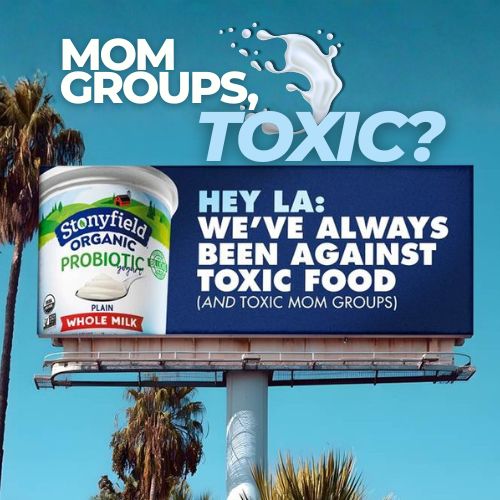
Turning pop culture drama into brand commentary
Instead of engaging directly with the individuals involved, Stonyfield reframed the conversation through a clear and values-driven statement: “Toxins don’t belong in our food or in our mom groups.” The message cleverly links social well-being with the brand’s commitment to organic, toxin-free products.
This wasn’t a one-off reaction. Over the years, Stonyfield has consistently tied the idea of a toxin-free lifestyle to broader cultural conversations happening naturally on social media. The moment simply allowed the brand to say, “This is what we stand for,” in a way that felt relevant and authentic.
A giveaway designed to resonate, not shout
To bring the message to life, Stonyfield launched a nationwide giveaway, offering free yogurt to moms across the United States through its website. The response was immediate: approximately 15,000 products were claimed in a short period of time, signaling strong resonance with the audience.
Although the giveaway has temporarily closed, the brand confirmed it is actively working to extend more free product to customers. The campaign is set to run through January 21, reinforcing the idea that this activation was about participation, goodwill, and brand alignment—not artificial scarcity.
From social feeds to the streets
While the campaign lives primarily across Instagram, Facebook, and earned media, Stonyfield also extended the idea into the physical world. To ensure visibility in the epicenter of the conversation, the brand is developing a billboard in the Hollywood area highlighting the giveaway and its anti-toxicity message.
The move underscores how OOH advertising can act as cultural punctuation—taking a digital conversation and giving it permanence, scale, and credibility in the real world. In moments like this, billboards don’t just amplify messages; they legitimize them.
No influencers, no callouts—by design
Notably, Stonyfield chose not to work with influencers, nor did it directly contact Ashley Tisdale or any other rumored members of the “toxic mom group.” This deliberate restraint kept the focus on the idea rather than the individuals, allowing the brand to remain supportive instead of sensational.
The campaign is being supported by Alison Brod Marketing + Communications, with no budget figures disclosed. The absence of influencer amplification further emphasizes the brand’s confidence in the strength of the message itself.
When brand values meet cultural timing
According to Stonyfield’s senior brand manager Lisa Kinzel, the campaign’s success reflects how deeply the message resonated with moms. With most of the brand’s portfolio focused on family and kids products, Stonyfield has long positioned itself as an ally within parenting culture.
By entering the conversation without adding noise or negativity, the brand demonstrates a modern approach to cultural relevance: listen closely, respond with intention, and align every action with values you already live by. In doing so, Stonyfield proves that when culture and brand purpose align, even controversy can become an opportunity for connection.
Summary
Stonyfield Organic capitalized on a viral cultural moment to reinforce its brand values around living toxin-free.
By connecting organic food standards with social well-being, the brand launched a nationwide yogurt giveaway that quickly sold out.
The campaign extended across social media, earned press, and a planned Hollywood-area billboard, proving how timely insight can translate into high-impact brand relevance without influencer dependency.
Sources
Ready to advertise outdoors?
BM Outdoor plans, buys and prints OOH campaigns across all 50 states. Request a free quote with no commitment.













Comments
Be the first to comment.