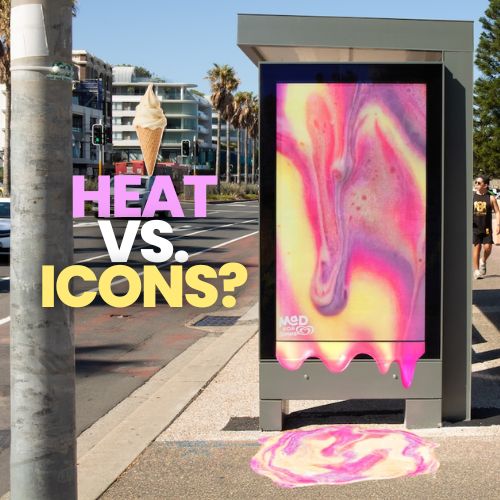
Why Streets Turned Melting Ice Cream Into a Creative Idea
Australians have a famously illogical relationship with ice cream. We chase it in peak summer heat, fully aware it will melt too fast, drip everywhere, and turn into a mildly stressful race against time — and yet we love it anyway.
That irrational devotion is the core insight behind Streets’ Mad For Streets summer platform. Instead of hiding the mess, the brand embraced it, turning melting into the creative idea itself.
How the “Mad For Streets” Campaign Celebrates Australian Summer Culture
Streets partnered with Thinkerbell to celebrate the joy, chaos, and emotional attachment Australians have to ice cream. The campaign captures a universal summer truth: even when ice cream falls apart, our love for it doesn’t.
By leaning into this cultural behavior, Streets transforms a common frustration into a moment of humor, recognition, and brand affection.

Iconic Ice Creams Reimagined in Streets’ Out of Home Campaign
The Out of Home executions feature completely melted versions of some of Australia’s most iconic ice creams, including Golden Gaytime, Bubble O’Bill, and the Rainbow Paddle Pop.
Despite losing their original shape, each product remains instantly recognizable — proving how deeply embedded these brands are in Australian culture. The work celebrates the sub-brands while reinforcing Streets as the masterbrand behind them all.
Strengthening the Streets Masterbrand Through Creativity
While Streets enjoys high brand awareness, consumers don’t always connect the masterbrand to the individual ice creams they love most. This campaign bridges that gap by celebrating the sub-brands at their messiest, while emotionally reconnecting them back to Streets.
Even melted and distorted, the products remain iconic — reinforcing the idea that the love for Streets goes beyond perfection or polish.

The Role of Out of Home Advertising in Peak Summer Moments
Created in partnership with oOh!media, the campaign rolled out during peak ice cream consumption season, using Out of Home to maximise relevance, visibility, and engagement.
By placing these melting icons directly into public spaces, Streets mirrored the real-life experience of eating ice cream in summer — fleeting, chaotic, and joyful. The physical environment became part of the storytelling, making OOH the perfect medium for the idea.
Why This Campaign Works
As Thinkerbell’s Executive Creative Tinker Sesh Moodley explains, ice cream is one of the few things Australians will chase knowing it will fall apart. That irrational love made melting the icons feel inevitable.
The campaign succeeds because it turns a product flaw into a brand strength, uses cultural truth instead of overproduction, and reinforces emotional connection at the exact moment consumers are most receptive.
Summary
Why Melting Became the Creative Idea
Australians have a famously irrational relationship with ice cream. They chase it in peak summer heat, fully aware it will melt too fast, drip everywhere, and turn into a race against time — and they love it anyway.
This insight sits at the heart of Streets’ Mad For Streets summer platform. Instead of hiding the mess, the brand embraced it, transforming melted ice creams into the hero of the campaign.
Sources
Frequently Asked Questions
It celebrates Australians’ irrational love for ice cream, even when it melts and gets messy.
The campaign was developed by Thinkerbell in partnership with Streets.
Iconic products such as Golden Gaytime, Bubble O’Bill, and Rainbow Paddle Pop appear in melted form.
Ready to advertise outdoors?
BM Outdoor plans, buys and prints OOH campaigns across all 50 states. Request a free quote with no commitment.












Comments
Be the first to comment.