The Uncomfortable Truth Behind True Crime
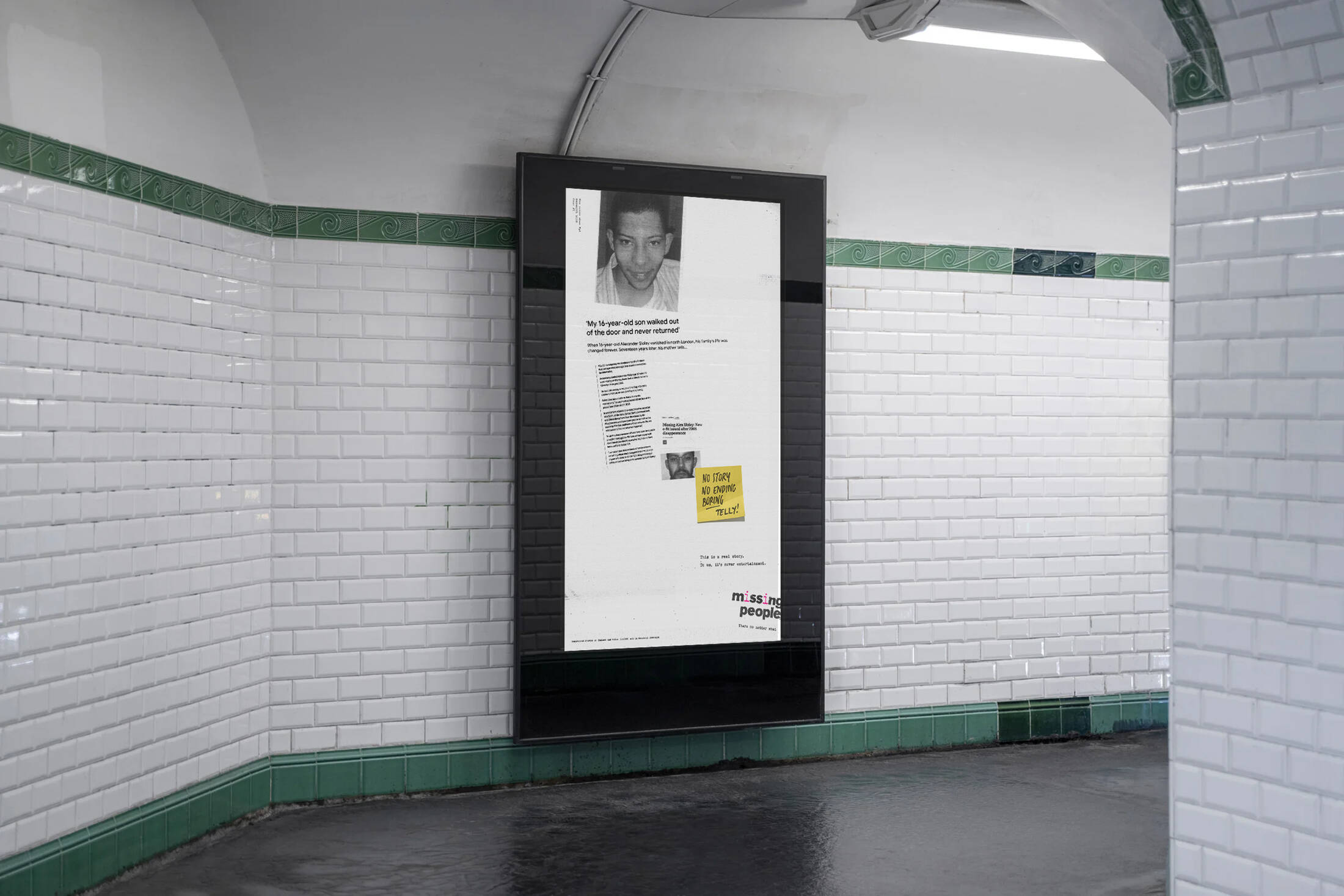
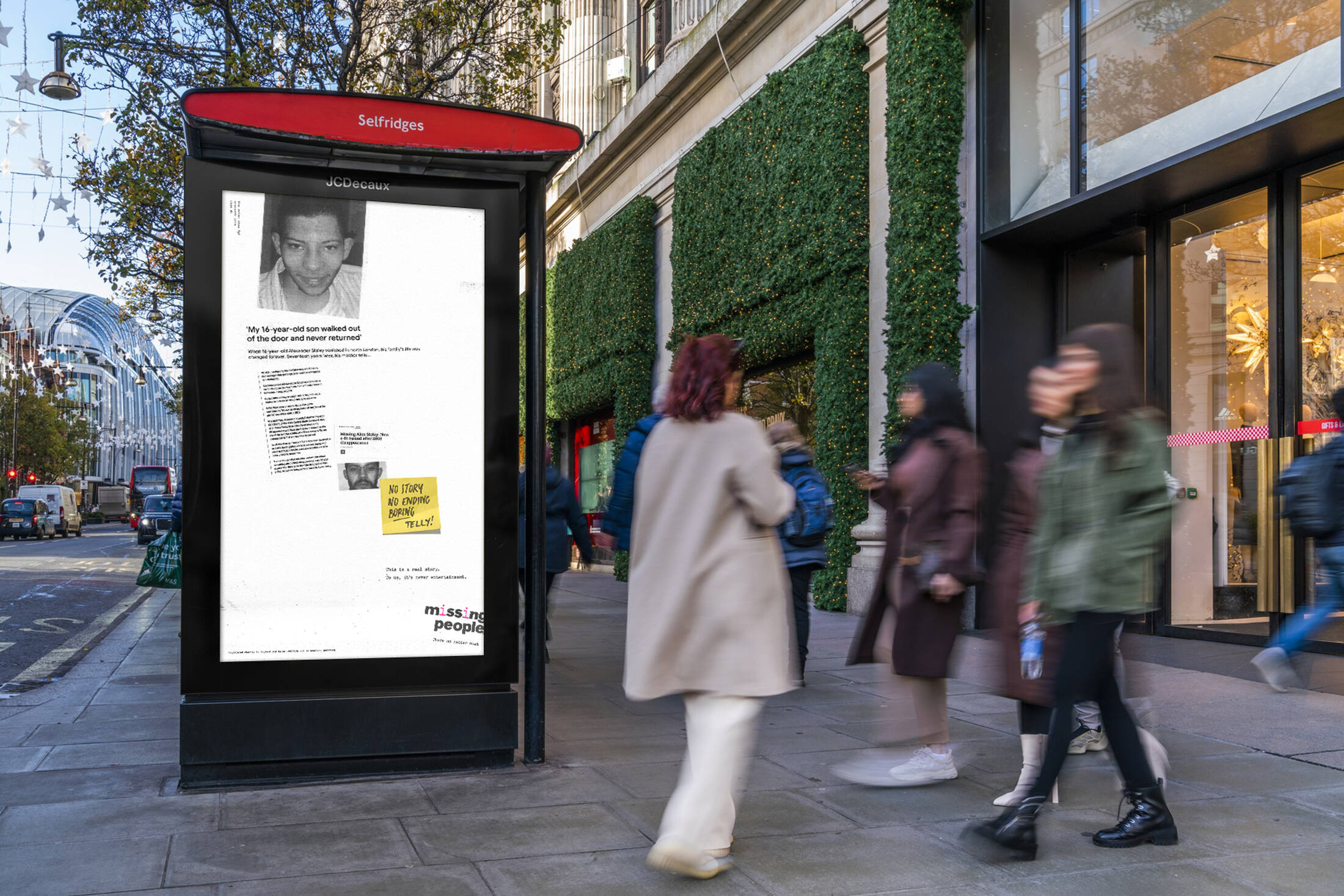
In an era where human tragedy has become binge-worthy content, Missing People is pushing back against the narrative. In collaboration with BBH London and production company Merman, the organization has launched a provocative campaign that challenges society’s growing appetite for real-life crime stories.
When Real Stories Become Entertainment
The tension at the heart of the campaign is clear. In the United Kingdom, a person is reported missing every 90 seconds, yet true crime consumption continues to surge, with nearly half of the population engaging with this type of content daily. What was once a serious and sensitive issue is increasingly treated as entertainment, packaged into podcasts, docuseries, and social media clips.
As a result, the lived reality of families is often overshadowed by views, ratings, and engagement metrics. Real people risk becoming storylines, and deeply personal tragedies are reduced to content formats designed to capture attention.

A New Standard: The Responsible Narratives Charter
To address this, Missing People has introduced the “Responsible Narratives Charter,” a commitment that encourages creators to tell these stories with respect and responsibility. The initiative aims to reshape how true crime is produced and consumed, ensuring that dignity and empathy are not lost in the pursuit of engagement.
The Film That Forces Discomfort
At the center of the campaign is a sharp, satirical film directed by Rachel Stubbings and executive produced by Sharon Horgan. Set in a sterile writers’ room, the film features actors including Paterson Joseph, Anna Crilly, and Rosie Cavaliero as they casually debate potential true crime stories.
They discuss pacing, plot twists, and commercial appeal, treating human lives as draft material. The twist is what makes the message land: every case referenced in the film is real. This stark reveal transforms the piece into a powerful reminder that these stories are not fiction, and the people behind them deserve respect.
Built With Real Voices
Authenticity was central to the campaign’s development. BBH London and Merman worked closely with individuals who have lived experience with missing persons cases, ensuring the work remained grounded and respectful.
Ross Miller, CEO of Missing People, emphasized that while public attention can help, it must be the right kind. Intrusive speculation and sensationalism can place additional pressure on families already facing unimaginable situations. In some cases, stigma can even discourage missing individuals from reaching out.
Advertising That Challenges Culture
This campaign stands out because it does not follow the typical awareness formula. Instead of simplifying the message, it leans into discomfort to provoke reflection. It questions not only media practices but also audience behavior, asking viewers to reconsider their role in the consumption of true crime.
Felipe Serradourada Guimaraes, Executive Creative Director at BBH, highlighted the deeper purpose behind the work: the opportunity to create something that goes beyond advertising and contributes to meaningful change.
A Reminder of What Matters
At its core, the campaign delivers a simple but urgent message. These are not just stories. They are real people, real families, and real consequences.
By confronting audiences with this reality, Missing People is not asking them to stop watching, but to start thinking.












Comments
Be the first to comment.