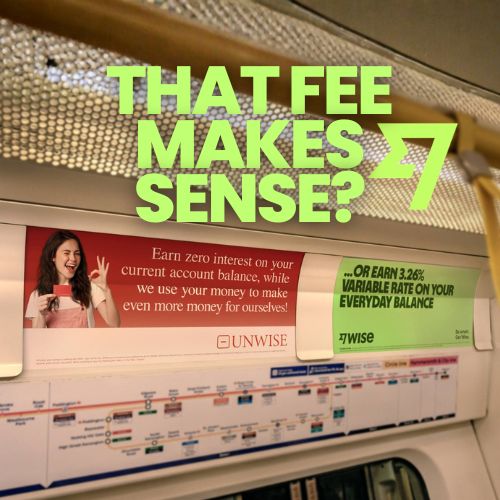
When fake banks tell a very real truth
Finance advertising often falls into the same pattern: polished visuals, generic trust language, and promises that feel interchangeable. Wise takes a very different route. Instead of simply saying it is better than traditional banks, the brand invents four fake institutions and uses them to spotlight the kind of behavior people already associate with legacy banking. That makes the message feel less like a sales pitch and more like a clear cultural observation.
The idea is simple, but that is exactly why it works. By creating imaginary banks with deliberately bad qualities, Wise gives form to invisible problems. Hidden fees, long waits, and unnecessary friction are hard to visualize on their own. A fake bank with an obviously absurd name makes those issues instantly legible in the real world.
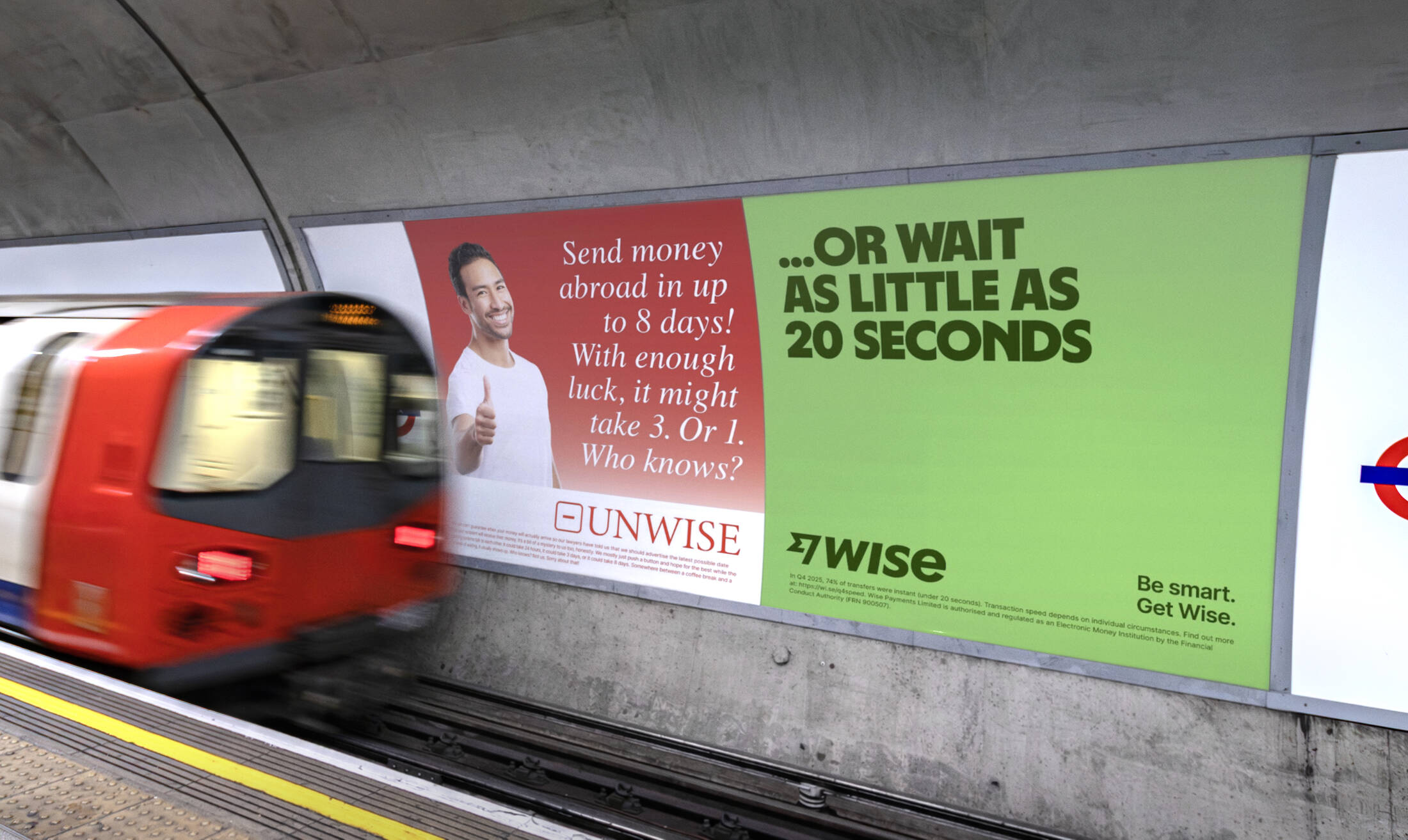
“Unwise vs Wise” makes comparison the creative engine
This campaign is part of Wise’s broader “Be Smart. Get Wise.” platform, but its strength comes from how directly it builds contrast into the idea. Instead of relying on technical explanations, the work creates a clean binary: there is the old way, and there is the smarter way. In outdoor advertising, that kind of immediate comparison is powerful because people do not need much time to understand it.
That is what makes the campaign especially strong for OOH. Great outdoor work does not overload the audience. It lands one thought fast. Here, Wise turns a category message into something visual, memorable, and slightly provocative. The fake banks do the heavy lifting, while the brand positions itself as the sensible alternative without overexplaining the point.
Why the campaign fits the finance category so well
Banking is full of pain points people have learned to tolerate. Delays, poor exchange rates, confusing charges, and rigid systems are often treated as normal. Wise reframes that normality as irrational. The campaign essentially asks: why are people still accepting financial experiences that are clearly “unwise”? That question gives the work both humor and bite.
This matters because finance campaigns rarely win attention by being louder. They win by being clearer. Wise understands that its audience does not need more category jargon. It needs a sharper way to recognize the problem. By exaggerating banking frustrations through fictional brands, the campaign makes a modern fintech message feel simple, human, and culturally relevant.
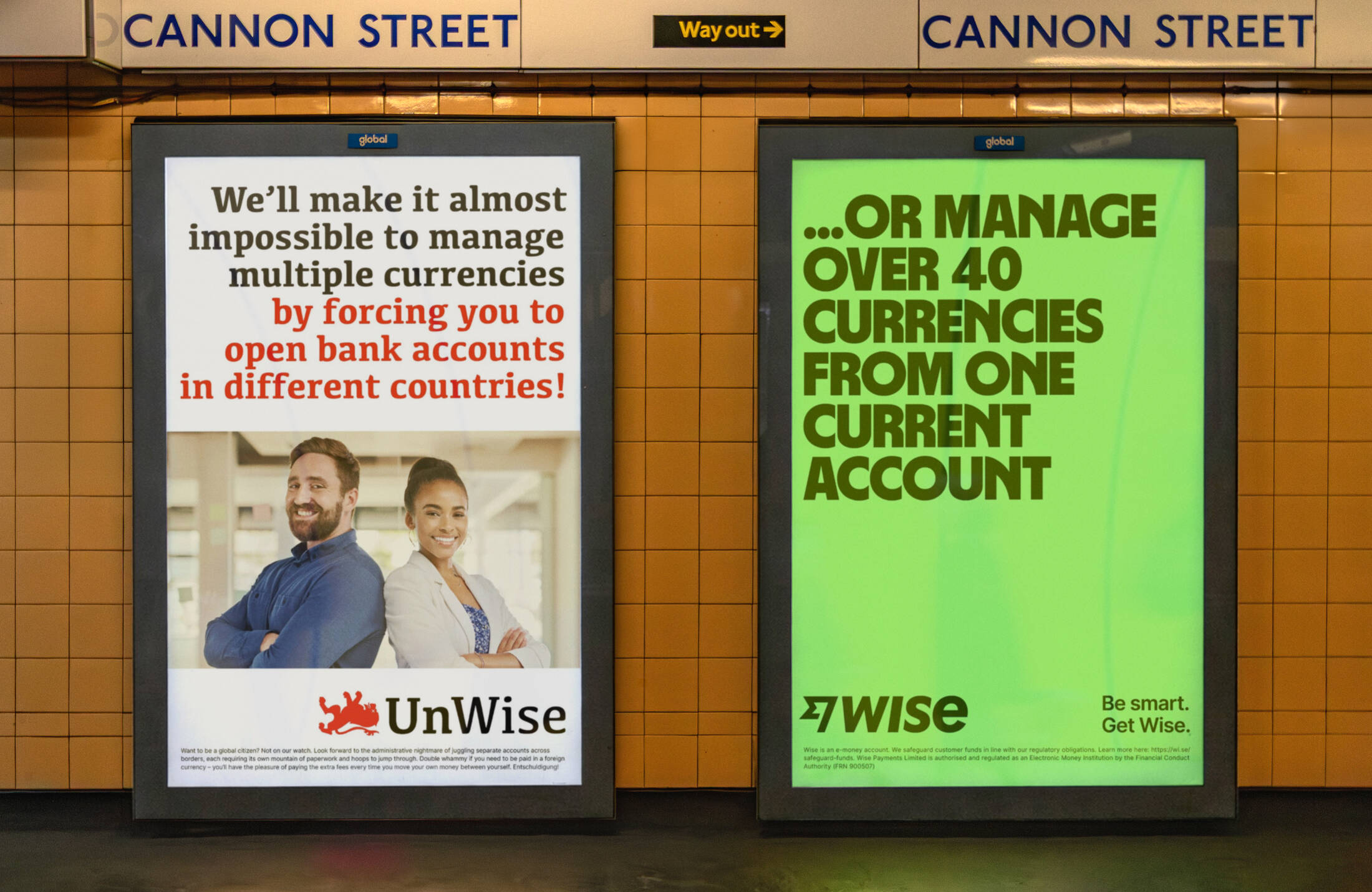
Outdoor gives the idea public visibility
Trade coverage reports that the campaign rolled out across major UK outdoor placements, including Transport for London formats, Tube car panels, National Rail stations, digital screens, and Heathrow, helping the message appear in the same everyday environments where people regularly make spending, travel, and money decisions. That scale gives the campaign more than reach; it gives the idea public legitimacy.
There is also something smart about using public space for this message. Banking frustration is usually experienced privately, on apps, statements, and transfers. Wise flips that by making those frustrations visible in shared urban environments. The result is a campaign that takes a personal problem and turns it into a public conversation.
A campaign built for memory, not just media spend
The best OOH campaigns leave behind a phrase, a mental image, or a point of view. “Unwise vs Wise” does all three. It gives the audience a simple language for recognizing bad banking behavior, and it attaches that recognition to the brand in a memorable way. That is much stronger than simply claiming speed, savings, or convenience.
From a strategy perspective, this is a smart example of how a fintech brand can use outdoor to do more than announce product benefits. It can reshape how people interpret the category itself. Instead of competing inside banking conventions, Wise makes those conventions look outdated.
Summary
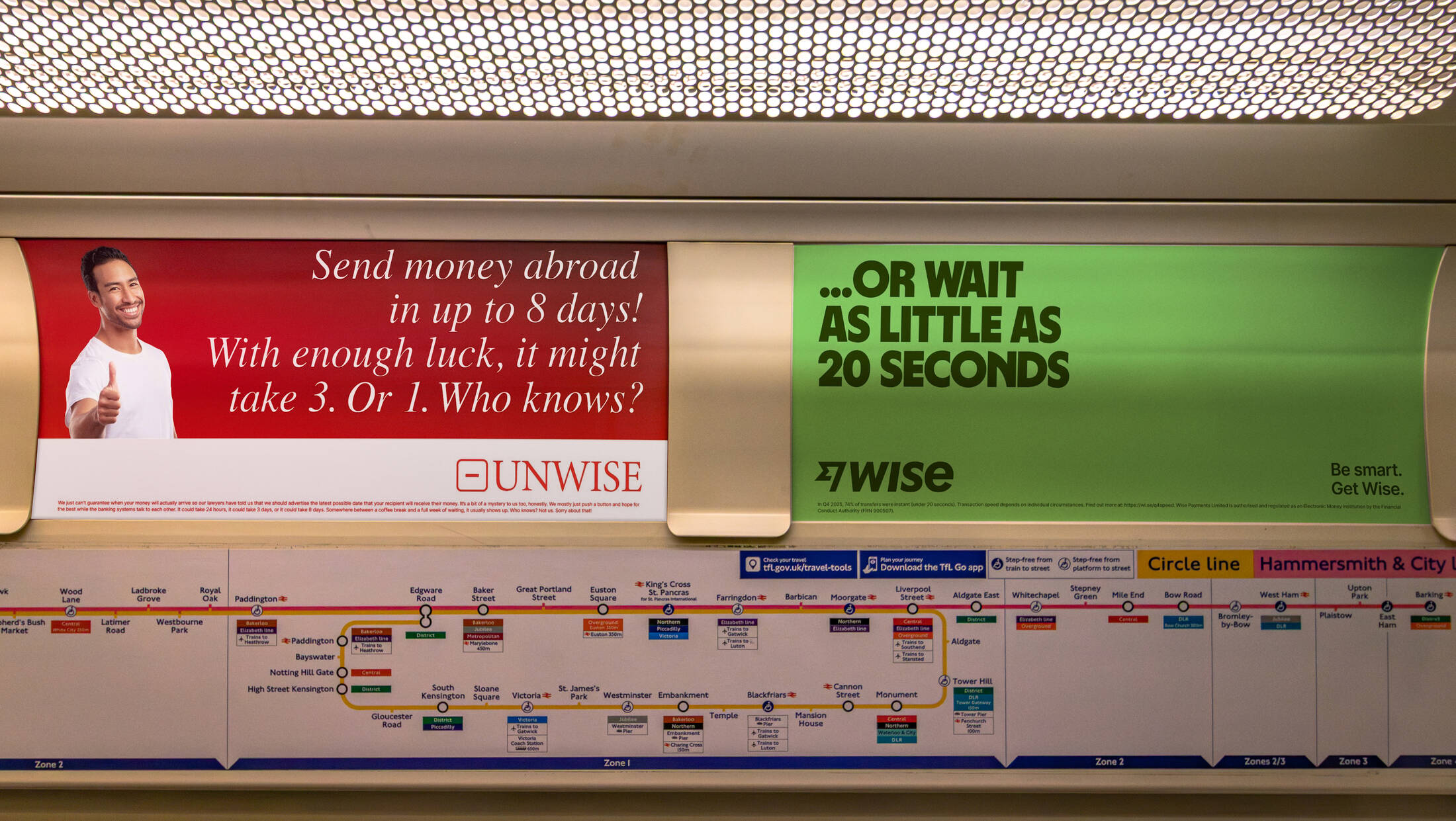
Finance advertising often sounds the same, but Wise takes a clearer and more memorable route. By inventing fake banks, the brand dramatizes the frustrations people already associate with outdated financial systems. The campaign works especially well in OOH because the contrast is immediate: old banking feels absurd, while Wise appears simple and smart. Rolled out across major UK placements, the campaign shows how outdoor can turn a category message into something public, visual, and culturally relevant.
Sources
Frequently Asked Questions
It is an outdoor campaign that uses fictional banks to highlight the inefficiencies and frustrations still associated with traditional banking, while positioning Wise as the smarter alternative.
The campaign was created for Wise by the agency Ace of Hearts and was published in the United Kingdom in April 2026.
Because it communicates a clear contrast fast. People can understand the problem and the brand’s position in just a moment, which is essential for effective outdoor advertising. This is an inference based on the campaign structure and OOH execution described in trade coverage.
Rather than using generic trust messaging, Wise turns category frustration into the creative concept itself. That makes the campaign feel sharper, more memorable, and easier to connect with.
Ready to advertise outdoors?
BM Outdoor plans, buys and prints OOH campaigns across all 50 states. Request a free quote with no commitment.






Comments
Be the first to comment.