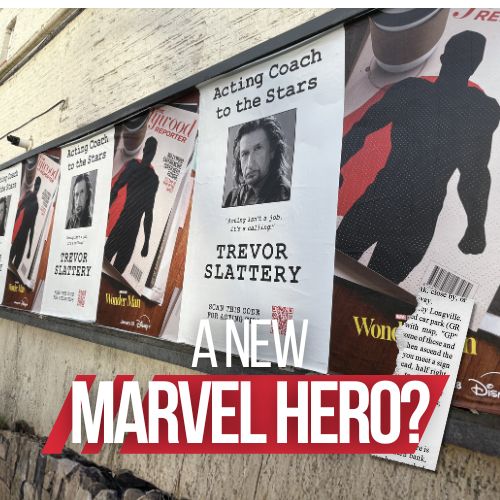
Why flyposting is perfect for Marvel launches
Flyposting is one of the fastest ways to build recognition in a city. Instead of relying on a single high-impact placement, it creates a repeated visual presence—corners, routes, and neighborhoods—so people encounter the creative multiple times in a day. That repetition is what turns “I saw an ad” into “I remember that title.”
For Marvel-style creative, flyposting also adds edge. It feels street-native and energetic, closer to music drops and film teasers than traditional advertising. When you’re promoting a series release, that vibe can matter as much as the media weight.
What the Wonder Man street campaign delivered in London
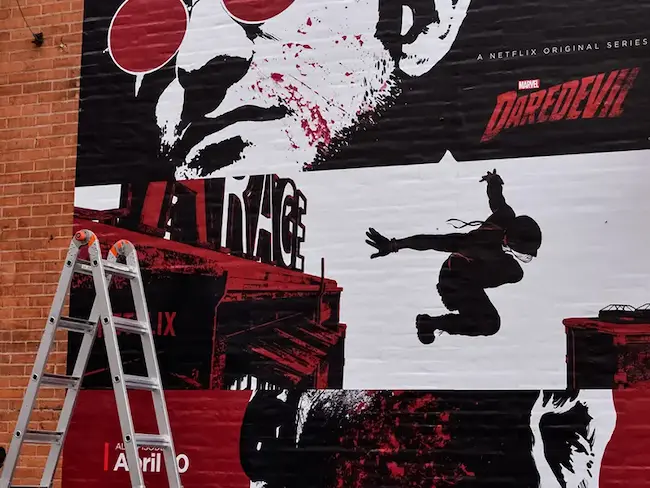
This execution brought bold Wonder Man key art into the real world across the capital, designed to stop people mid-walk and spark immediate recognition. Flyposting works especially well in London because the city is built on pedestrian flow: people move through the same corridors daily, and street formats live inside that routine.
It’s also inherently “camera-friendly.” Fans and commuters naturally photograph big clusters of posters—meaning flyposting can generate organic social amplification without the campaign needing to ask for it.
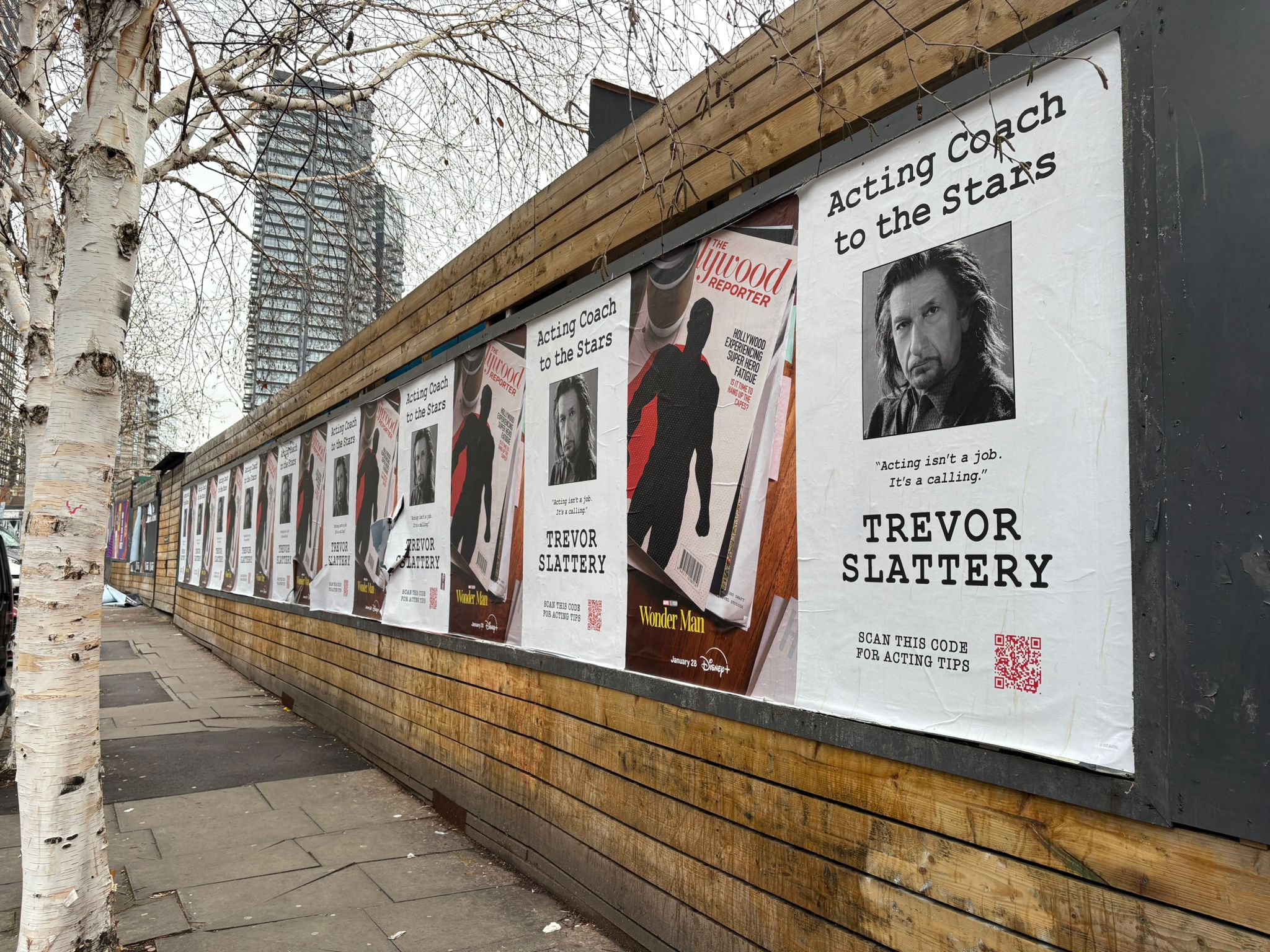
The OOH lesson: presence beats reach
Flyposting isn’t about maximizing a single headline metric. It’s about owning attention in micro-moments:
-
the walk to the station
-
the turn onto a busy high street
-
the pause at a crosswalk
-
the commute home when people are most open to entertainment
When creative is bold and instantly readable, these moments stack—building memory faster than many formats with broader but thinner exposure.
Creative rules that make flyposting work
If you want flyposting to land for entertainment, the winning formula is simple:
-
Instant readability: title/brand visible in under 2 seconds
-
High contrast: strong shapes, clean hierarchy
-
Minimal copy: let the key art do the talking
-
Series consistency: repeated visual cues across neighborhoods so it “clicks” on the second and third view
-
Placement discipline: clusters where footfall is natural, not forced
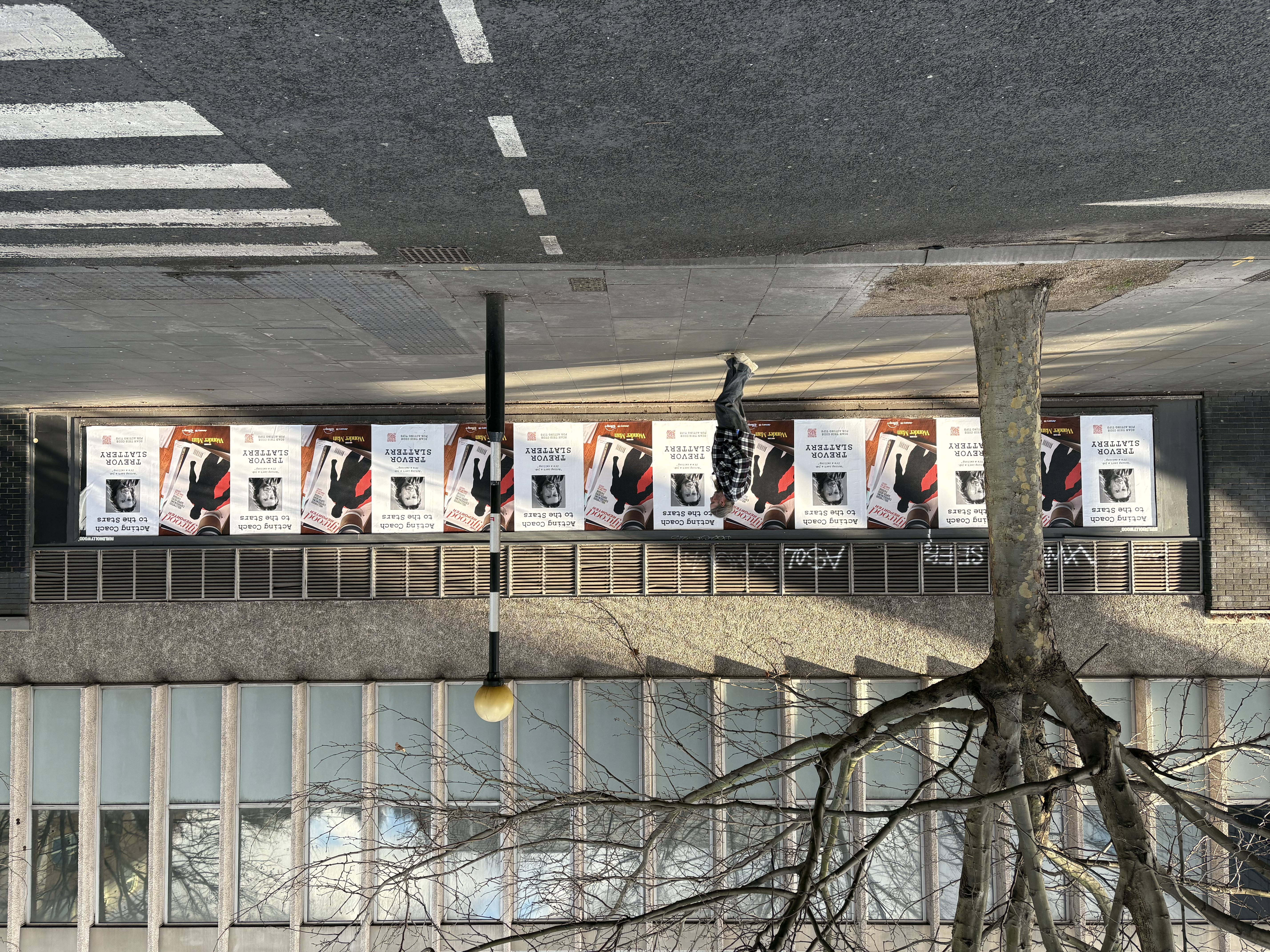
Why this format fits Wonder Man specifically
“Wonder Man” benefits from fast familiarity—especially if the goal is to seed curiosity and lock in name recognition ahead of a release window. Flyposting helps by making the title feel like it’s already “everywhere,” which is exactly what streaming platforms want before trailers and social content do the conversion work.
Summary
A London-wide flyposting burst puts Wonder Man creative into street-level environments where commuters and pedestrians repeatedly see it.
Flyposting turns a streaming launch into a cultural “drop,” making the city feel like part of the release.
The format prioritizes frequency, memorability, and shareable “in-the-wild” moments.
It’s a strong example of how analog OOH can still feel premium with bold design and smart placement.
Sources
Frequently Asked Questions
Flyposting is the placement of posters in clusters or sequences on street-level surfaces to build rapid visibility and repetition in high-footfall areas
Because it creates fast recognition through frequency, feels culturally current, and produces “in-the-wild” moments people naturally share.
Billboards win on big visibility in fewer locations; flyposting wins on repeated exposure across many street-level touchpoints.
Ready to advertise outdoors?
BM Outdoor plans, buys and prints OOH campaigns across all 50 states. Request a free quote with no commitment.





Comments
Be the first to comment.