What happened
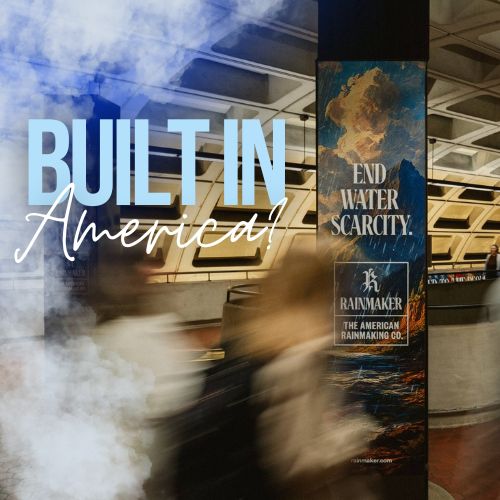
Rainmaker teamed up with HAYMAKER on a new campaign focused on correcting misconceptions and highlighting the “truth” behind Rainmaker’s cloud seeding technologies—positioned as efficient and safe solutions to drought. The work includes out-of-home and digital video creative, and it’s designed to speak directly to the audiences who shape water policy: lawmakers, policymakers, and local communities.
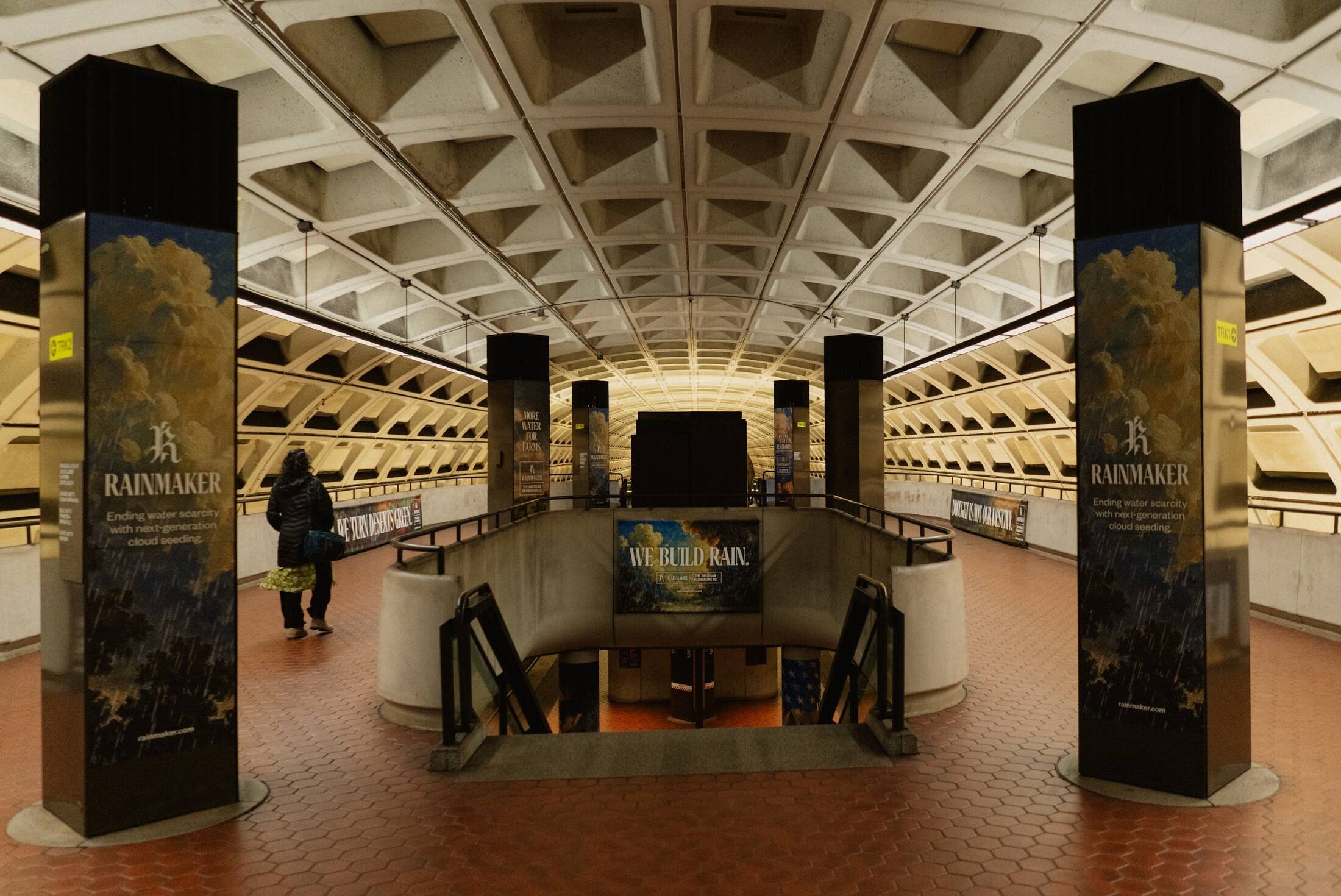
The OOH rollout begins in Washington, D.C., including placements at Capitol South Station near Capitol Hill, and extends to Salt Lake City—where messaging ties the technology to regional urgency and landmark-level outcomes.
Why this campaign chose Washington, D.C.
OOH near government corridors is a strategic move when the objective is policy attention. D.C. placements aren’t just about reach—they’re about influence. When a message sits in the daily path of staffers, agency stakeholders, and elected officials, it frames the issue as immediate and solvable. The campaign’s tone is intentionally direct—less “brand story,” more “public infrastructure.”
The creative strategy: make it feel like American infrastructure
The campaign headlines are built like civic statements:
-
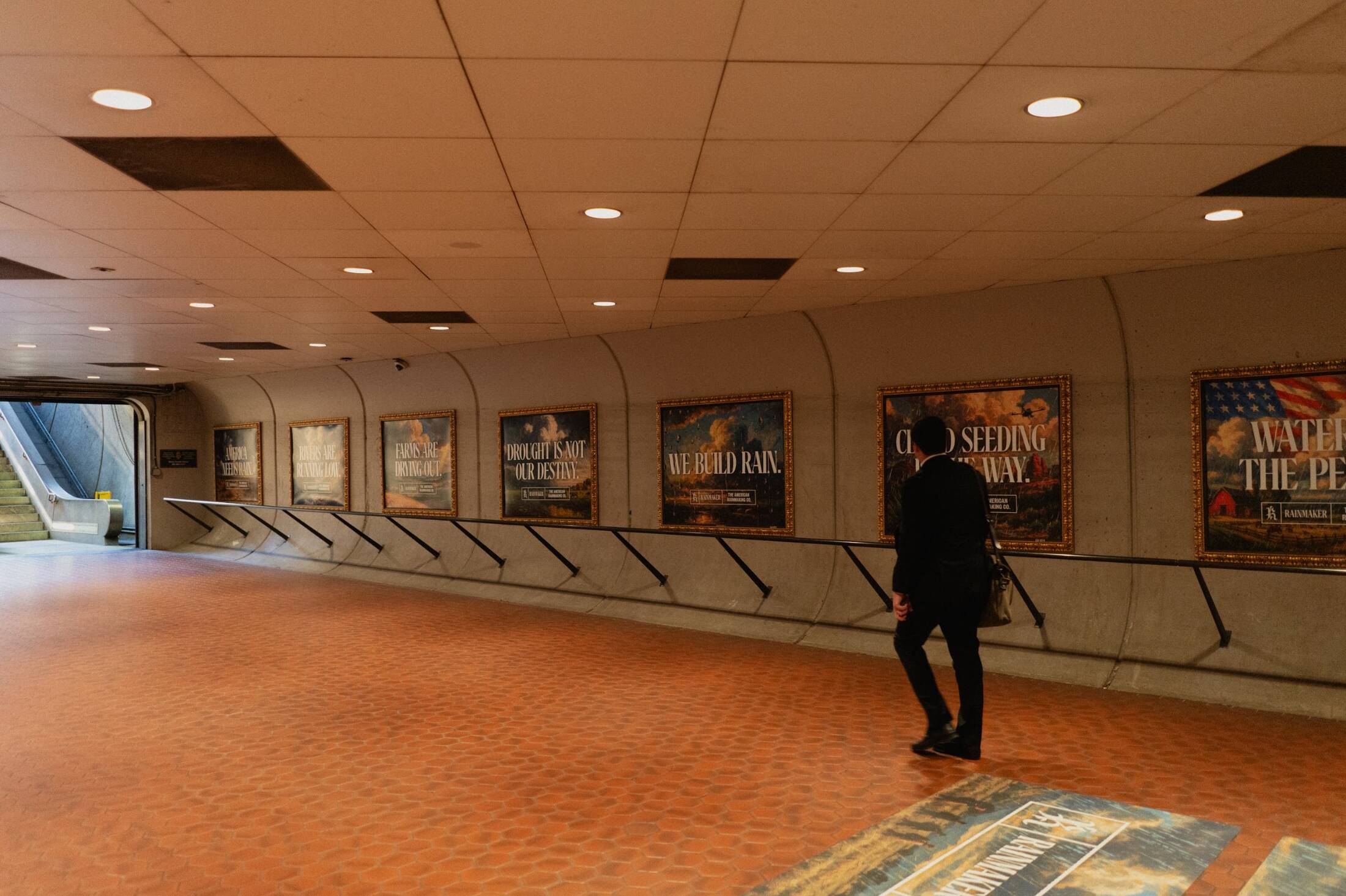
“WE BUILD RAIN”
-
“AMERICA NEEDS RAIN”
-
“DROUGHT IS NOT OUR DESTINY”
Rainmaker is cited as “The American Rainmaking Company,” signaling “Made here, built for here”—a framing that fits the infrastructure narrative and speaks to national-scale urgency.
In Salt Lake City, the line “WE CAN REFILL THE GREAT SALT LAKE” anchors the message to a specific public concern, turning a complex technology into a tangible outcome people can picture.
Proof and credibility cues: science, validation, and “show your work”
Rainmaker’s claims emphasize methods and verification: precision drones, weather modeling, and radar validation—language chosen to reduce the “mystique” around cloud seeding and replace it with measurability. The campaign is essentially saying: this isn’t a speculative idea; it’s engineered, monitored, and intended to work with nature.
That credibility posture is reinforced by spokesperson quotes: Garrett Schabb frames drought as a present problem impacting everything from food prices to health and utilities, while Jay Kamath positions the creative as “truth-first,” arguing trust is earned by being direct about what the technology does and why it matters.
Why it matters for OOH and DOOH
This is a strong example of mission-driven B2G/B2C crossover: one campaign designed to influence public policy thinking while also educating the general public. It uses OOH’s biggest advantage—public, unavoidable visibility—to legitimize an invisible process (cloud seeding) by turning it into a clear, civic message.
It’s also a reminder that not all OOH is built for product sales. Some of the most effective outdoor campaigns are built for belief change—especially when the topic is complex, controversial, or misunderstood.
Summary
The strategy is simple: treat drought like a present-tense national problem and frame cloud seeding as practical public infrastructure—not sci-fi.
OOH placements near policy corridors (including Capitol South Station) are designed to earn attention where funding, regulation, and public narrative are shaped.
Creative lines like “AMERICA NEEDS RAIN” and “DROUGHT IS NOT OUR DESTINY” emphasize clarity and trust, while Rainmaker highlights drones, modeling, and radar validation to signal “show your work” science.
In Utah, the story becomes tangible with the “WE CAN REFILL THE Great Salt Lake” framing—turning climate urgency into a specific outcome people can visualize.
Sources
Frequently Asked Questions
To build public and policymaker understanding of cloud seeding and position its approach as a credible, present-day response to drought and water scarcity.
Because the campaign is designed to reach lawmakers, policymakers, and adjacent decision-making ecosystems where water policy and funding priorities are shaped.
In Washington, D.C. (including Capitol South Station near Capitol Hill) and in Salt Lake City.
Ready to advertise outdoors?
BM Outdoor plans, buys and prints OOH campaigns across all 50 states. Request a free quote with no commitment.


Comments
Be the first to comment.