
Quick Answer: Billboard advertising for restaurants works when the board is close enough to change a meal decision and simple enough to understand at driving speed. The strongest restaurant campaigns combine high-traffic corridors, meal-time flows, trade-area coverage, and a clear reason to visit: a new location, a limited-time offer, catering, delivery, drive-thru, or a signature product.
Why Restaurants Use Billboards
Restaurants have a location problem before they have a media problem. A guest may like the food, but the restaurant still has to become the obvious choice when that guest is hungry, commuting, leaving work, passing a retail center, or deciding where to stop with family. Outdoor advertising helps restaurants stay visible in those exact moments.
For quick-service restaurants, billboards can build repeated memory along the routes people already drive every week. For full-service restaurants, they can make a new dining option feel established faster. For local operators, a board can do what many digital ads struggle to do: show the restaurant as part of the physical market, not just another ad in a feed.
Start With the Restaurant Trade Area
The first question is not "which billboard is biggest?" It is "which routes actually feed the restaurant?" A board with impressive traffic can still be weak if drivers pass it after they have already chosen lunch, if the route does not connect to the store, or if the location is too far from a realistic visit.
For most restaurants, a practical starting radius is 3 to 10 minutes of drive time. That can expand for destination dining, entertainment districts, airport markets, casino corridors, tourist areas, or regional franchise launches. The key is to connect each unit to its real customer paths: home to work, office to lunch, school pickup to dinner, hotel to restaurant row, or highway exit to drive-thru.
Site Selection Near Meal-Time Flows
Restaurant billboards should be evaluated by daypart behavior. Breakfast traffic is different from dinner traffic. A road that is powerful at 7:30 a.m. may not help a dinner campaign. A board near a highway exit may be valuable for drive-thru, but less useful for a sit-down concept if the exit does not make the restaurant easy to reach.
Look for placements that match the campaign role:
| Restaurant Goal | Best Placement Logic | Message Angle |
|---|---|---|
| Grand opening | 3 to 10 minute drive radius, routes entering the trade area, nearby retail centers | "Now open" plus food image and location cue |
| Lunch traffic | Office corridors, industrial parks, hospital districts, college areas | Speed, value, combo, online ordering, catering |
| Dinner traffic | Homebound commuter routes, grocery corridors, school pickup routes | Family meal, dine-in, takeout, limited-time item |
| Late night | Entertainment districts, campuses, drive-thru corridors | Open late, drive-thru, delivery, craveable hero product |
| Catering | Office clusters, medical campuses, business parks | Catering offer, order deadline, phone or short URL |
Recommended Formats
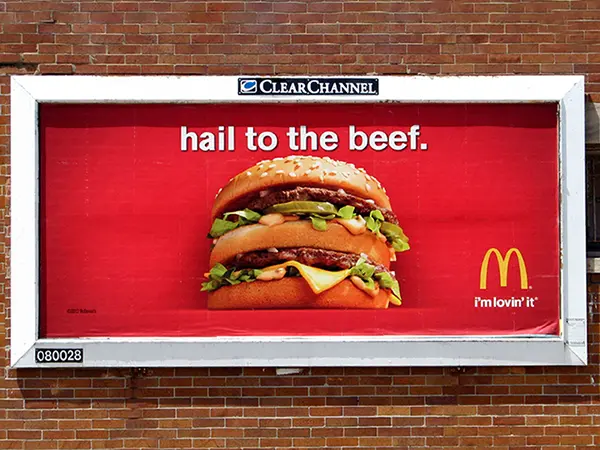
Static bulletins work well for restaurants that need sustained location awareness. A static board can repeat one message every day: the brand, the food, the exit, and the reason to stop. It is especially useful for new locations, new markets, and franchise groups that want a strong physical presence.
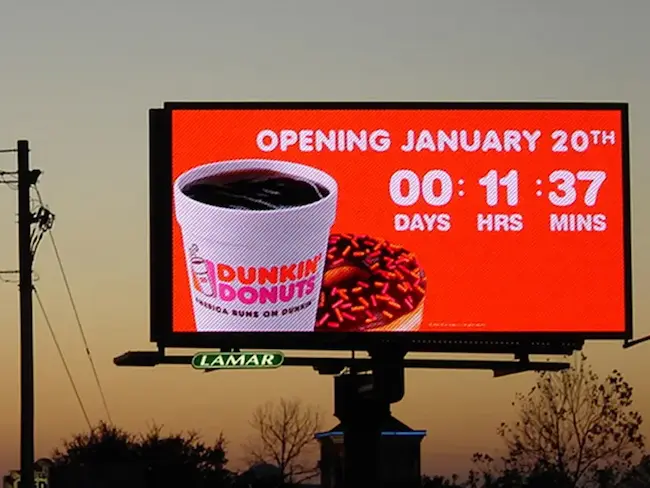
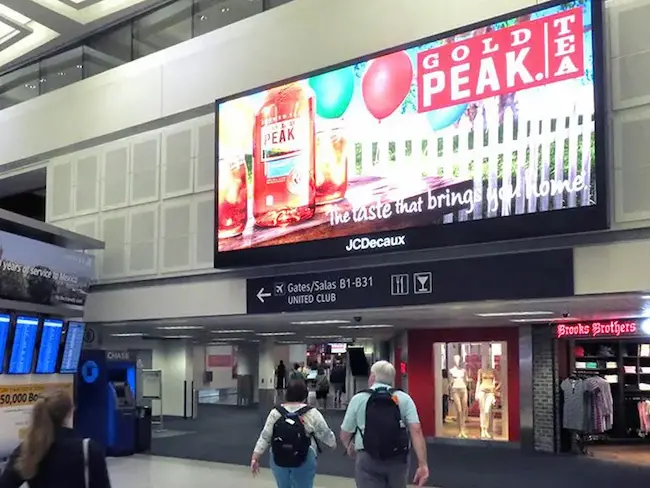
Digital billboards are useful when the message should change by daypart. A breakfast creative can run in the morning, lunch in the late morning, dinner in the afternoon, and late-night in the evening. This can be valuable for QSR, coffee, pizza, tacos, burgers, chicken, and delivery-led concepts. Digital also lets operators rotate limited-time offers without producing a new vinyl each time.
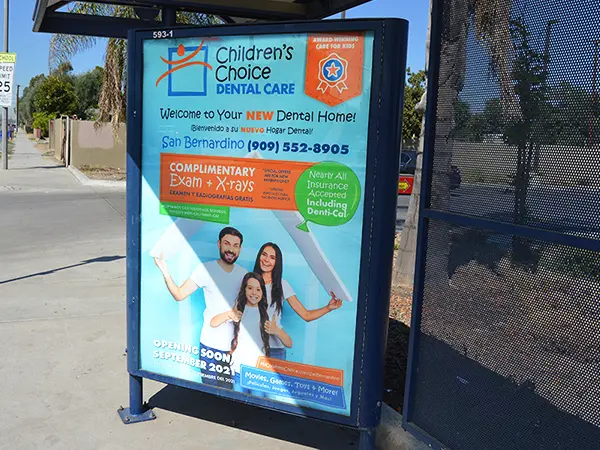
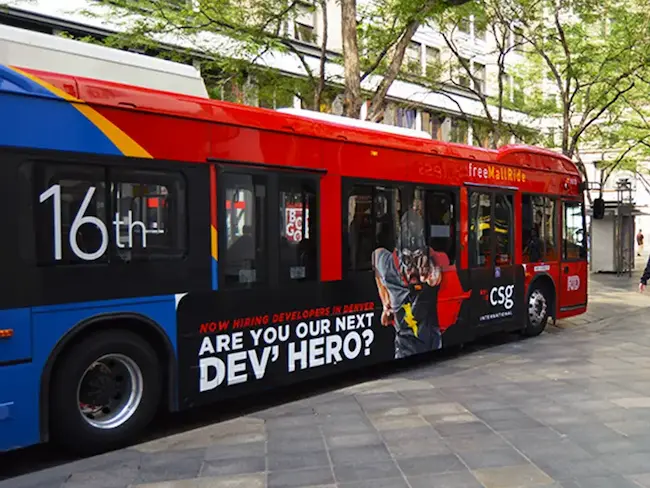
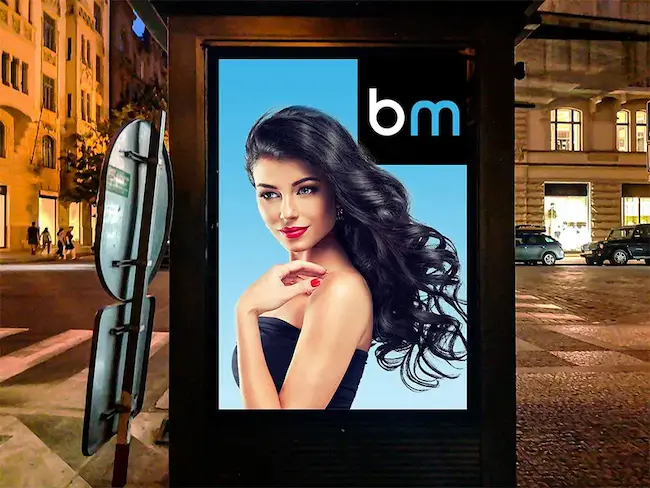
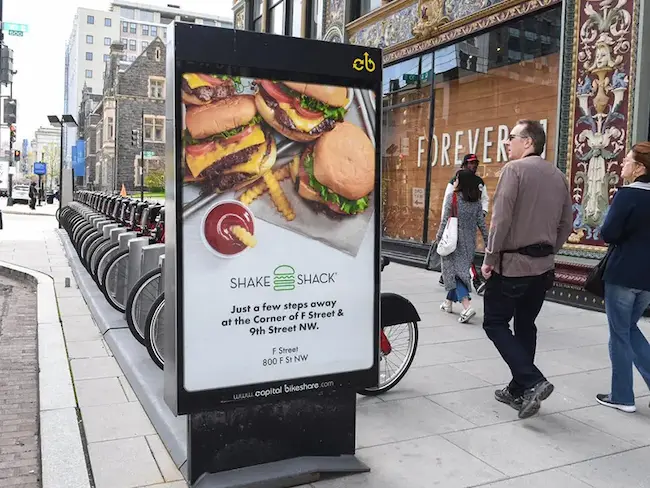
Transit, street furniture, and mall media can support dense urban restaurants where pedestrians, tourists, or shoppers matter more than highway traffic. These formats are not a replacement for billboards, but they can improve reach close to the point of decision.
Creative That Works at Driving Speed
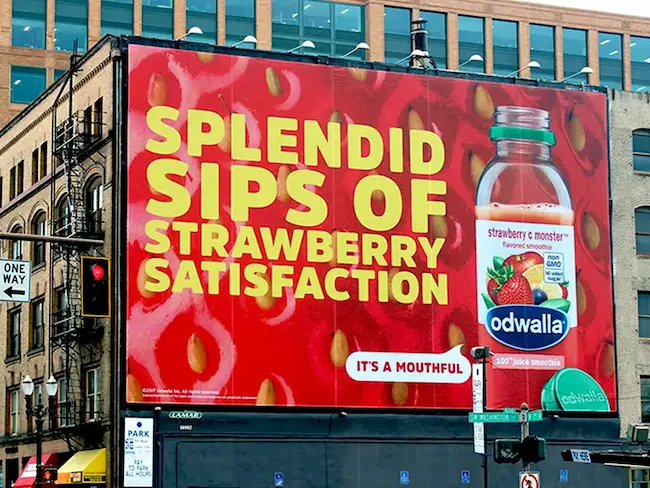
Restaurant creative should not try to show the full menu. Use one product hero, one offer or reason to act, and one directional cue. If the restaurant is hard to find, the location cue matters as much as the food. If the brand is new, the food visual may need to do more work than the logo.
Strong examples include "Now Open - Exit 42", "Lunch in 10 Minutes", "Drive-Thru Open Late", "Family Meal Tonight", "Catering for Offices", or "Two Blocks Ahead". Weak examples include long menu lists, small QR codes, multiple offers, social handles, and copy that requires the driver to think.
Launch Campaigns for New Locations
A new restaurant location needs awareness before opening, heavy visibility during the first weeks, and reminders after the first visit wave slows down. A practical opening plan often uses three stages: coming soon, now open, and reason-to-return. The first stage builds recognition. The second stage drives trial. The third stage keeps traffic from falling after the novelty wears off.
Franchisees and operators should avoid buying one board only because it is available. The better plan is to map the trade area, identify the top feeder routes, and choose boards that make the new unit feel unavoidable to nearby drivers.
Promotions and Limited-Time Offers
OOH can support promotions, but the promotion must be simple. If a guest needs to read terms, compare prices, or remember a long code, the board is doing too much. Use outdoor to create appetite and recognition, then let search, maps, mobile ordering, or the store complete the conversion.
For pricing detail, use BM Outdoor's How Much Do Billboards Cost guide. Restaurant campaigns vary by market, format, traffic quality, flight length, and availability, so the right budget should be built around the locations and dayparts that matter to the restaurant.
City Examples for Restaurant Buyers
A restaurant campaign in Los Angeles may need neighborhood-level planning because drive times and dining zones can change quickly. In New York City, transit and street-level visibility may matter as much as large-format boards. In Dallas-Fort Worth or Houston, highway corridors and suburban trade areas often play a larger role.
Measurement
Restaurants should measure billboards by location-level signals, not only impressions. Compare POS sales before and during the flight. Watch branded search, map direction requests, calls, online orders, coupon redemptions, delivery app activity, and store visits. If multiple locations are open, compare exposed trade areas against similar unexposed locations.
BM Outdoor Takeaway
Restaurant OOH is strongest when it is planned around real movement: morning coffee routes, lunch corridors, school pickup, dinner commutes, hotels, retail centers, and late-night flows. To build a location-specific plan, use the BM Outdoor quote form and share the restaurant address, target radius, launch date, and primary offer.
Frequently Asked Questions
Yes, when the location is close enough to influence a real dining decision. Restaurant billboards work best near commuter corridors, office clusters, retail centers, schools, entertainment zones, hotels, and exits that feed the restaurant trade area.
For most restaurants, the strongest boards sit within a 3 to 10 minute drive of the location. Regional dining, destination restaurants, airport-area restaurants, and franchise launches can use a wider radius if the message is easy to act on.
Use one food visual, one reason to visit, and one location cue. A strong restaurant billboard might promote a grand opening, lunch special, late-night drive-thru, catering, delivery radius, or a limited-time menu item.
Digital billboards are useful for dayparted messages such as breakfast, lunch, dinner, late night, and weekend promotions. Static bulletins are often better for longer awareness campaigns, permanent location reminders, and franchise market entry.
Track store visits, branded search, map direction requests, promo code redemptions, QR scans when appropriate, POS lift by location, and performance before, during, and after the flight.
Single-location restaurants should concentrate spend around the highest-intent routes into the store. Multi-location groups should plan coverage by trade area so each board supports a specific unit or cluster.
Use BM Outdoor's How Much Do Billboards Cost guide for pricing detail, then request a custom quote because restaurant pricing depends heavily on market, format, traffic, flight length, and availability.
Ready to advertise outdoors?
BM Outdoor plans, buys and prints OOH campaigns across all 50 states. Request a free quote with no commitment.




Comments
Be the first to comment.